Wednesday, November 25, 2026

Home Blog Page 82

Beijing center opens platform for scaling up humanoid robots

0

By Guo Yanqi | chinadaily.com.cn | Updated: 2026-01-30

The Beijing Innovation Center of Humanoid Robotics opened a pilot manufacturing and validation platform on Thursday that is designed to support the transition of humanoid robots from small-batch prototyping to scalable production.

The launch was also marked by the rollout of the center’s 1,000th customized prototype robot.

Completed and brought online last year, the massive facility covers prototyping process validation, system integration, and testing to promote practical applications for embodied humanoid robots. It is designed to serve companies, universities, and research institutes across the industry’s supply chain.

Article inline ad

Astrazeneca To Strengthen Cooperation With China

0

By Li Jing | China Daily | Updated: 2026-01-31

AstraZeneca’s decision to invest more than 100 billion yuan ($14.39 billion) in China by 2030 marks a new chapter for the British drug-maker in a market it increasingly sees as central to global pharmaceutical innovation, said its chief executive officer, as China and the United Kingdom move to deepen economic and scientific cooperation.

The investment plan was announced on Thursday during British Prime Minister Keir Starmer’s visit to China.

“We have been very committed to China for many years,” Pascal Soriot, CEO of AstraZeneca, said in an interview with China Daily. “In the last five or six years, China has become a fundamental part of innovation in our sector, with great science and increasingly strong companies.”

Under the plan, AstraZeneca will expand pharmaceutical manufacturing and research and development in China through to 2030, leveraging the country’s scientific research strengths, advanced manufacturing capabilities and growing biotechnology ecosystem.

Soriot said China’s importance to the company now extends well beyond its large patient base.

“There are many patients in China who need innovative medicines,” he said. “But equally important is the ability to partner with Chinese companies, manufacture here and export products from China to the rest of the world.”

The investment will cover the full pharmaceutical value chain, from drug discovery and clinical development to large-scale manufacturing. A major focus will be advanced treatment modalities, including cell therapy and radioconjugate drugs.

Building on its 2024 acquisition of Shanghai-based Gracell Biotechnologies, AstraZeneca said it will become the first global biopharmaceutical company to establish end-to-end cell therapy capabilities in China.

These investments build on AstraZeneca’s expanding R&D footprint in China. The company operates two global strategic R&D centers in the country — one in Shanghai and one in Beijing — placing China alongside Europe and the United States as a core pillar of its global research network.

“China is a fundamental part of our global R&D system,” Soriot said.

According to the company, the two centers in China collaborate with more than 500 hospitals and have led a large number of global clinical trials over the past three years.

On the manufacturing side, AstraZeneca has production sites in Wuxi and Taizhou, with facilities planned or upgraded in Qingdao and Beijing. Medicines produced in China are supplied domestically and exported to more than 70 markets worldwide.

The latest investment will further expand this footprint, with new production facilities to be announced in due course. AstraZeneca said its workforce in China will grow beyond 20,000 employees, with thousands of additional jobs expected across the broader healthcare ecosystem.

Collaboration with Chinese biotechnology companies remains a cornerstone of AstraZeneca’s China strategy. The company said the investment will support deeper partnerships aimed at bringing Chinese innovation to global markets.

AstraZeneca already works with several Chinese biotechs. On Friday, the company announced a strategic R&D collaboration and licensing agreement with Hebei province-based CSPC Pharmaceutical Group Ltd, to develop long-acting peptide therapies, using CSPC’s sustained-release drug delivery platform and AI-powered peptide discovery technology.

Soriot said such partnerships illustrate the rapid rise of China’s biotech sector. “China is already a fundamental part of innovation in our industry,” he said. “The US is one pillar, and China is quickly emerging as the other.”

The investment comes as China-UK economic ties continue to deepen. Bilateral goods trade reached $103.7 billion in 2025, while two-way investment stock stood at nearly $68 billion, according to China’s Ministry of Commerce. Trade in services is expected to exceed $30 billion.

Soriot said the two countries’ strengths are highly complementary, particularly in life sciences, artificial intelligence and the green transition.

Article inline ad

Xinjiang’s Industrial Production And Investment Saw Notable Gains In 2025

0

By Fang Aiqing and Mao Weihua in Urumqi | chinadaily.com.cn | Updated: 2026-01-31

Industrial production and investment in Northwest China’s Xinjiang Uygur autonomous region experienced rapid growth in 2025, outpacing the national level, official data showed.

According to the regional bureau of statistics, Xinjiang’s GDP reached 2.15 trillion yuan ($309 billion) in 2025, a year-on-year increase of 5.5 percent. Industrial added value from enterprises above the designated size rose by 7.7 percent, while fixed-asset investment grew by 7.2 percent — 11 percentage points higher than the national number.

At a news conference in Urumqi on Friday, Lei Haijun, director of the bureau, said Xinjiang accelerated the development of a modern industrial system and industrial transformation last year, sustaining robust industrial growth and demonstrating the sector’s resilience.

The manufacturing sector recorded an 11.2 percent rise in value added, while mining grew by 6.2 percent. Several key industries saw double-digit expansion: nonferrous metal mining and processing surged 34.2 percent, textiles grew 26.1 percent, and nonferrous metal smelting and rolling increased 18.5 percent. Chemical raw materials and products, gas production and supply, and nonmetallic mineral products also posted gains above 10 percent.

On the investment side, industrial investment — which accounted for 54.9 percent of total fixed-asset investment — climbed 8.6 percent year-on-year, contributing 4.7 percentage points to the overall growth. By sector, investment in petroleum, coal, and other fuel processing soared 130 percent, textiles rose 31.1 percent, and chemical raw materials and products grew 22.6 percent.

Infrastructure investment expanded 15.6 percent, contributing 3.2 percentage points to total fixed-asset investment growth. Within this category, information transmission, computer services and software jumped 96.1 percent, while transport, storage, and postal services increased by 17 percent.

Notably, investment in wind power projects grew rapidly in 2025, with 253 projects — 60 more than the previous year — recording a 33.4 percent year-on-year growth in completed investment, contributing 2.6 percentage points to the overall growth in fixed-asset investment.

Private investment showed vigor in sectors such as information transmission, computer services and software, water conservancy, environment and public facilities management, as well as transport, storage and postal services.

Lei noted that while Xinjiang’s economy maintained stable progress in 2025, it still faces challenges from external uncertainties and insufficient effective demand. He added that more proactive macro policies will be implemented to expand domestic demand, optimize supply, stabilize employment and market expectations, and promote high-quality growth.


Article inline ad

Guangdong’s Trade With APEC Economies Exceeds 6t Yuan In 2025

0

By  Zheng Caixiong in Guangzhou | chinadaily.com.cn | Updated: 2026-01-31

South China’s Guangdong province purchased 1.72 trillion yuan ($242.25 billion) worth of mechanical and electrical products from APEC economies last year, marking a 13.7 percent year-on-year increase.

The figure represented 73.2 percent of the province’s total imports from APEC economies, said a statement released by Guangdong Customs on Friday.

Among them, imports of integrated circuits surged to 987.35 billion yuan, a 19.6 percent year-on-year increase, while imports of computers and their parts reached 261.88 billion yuan, a year-on-year rise of 17.9 percent, the statement said.

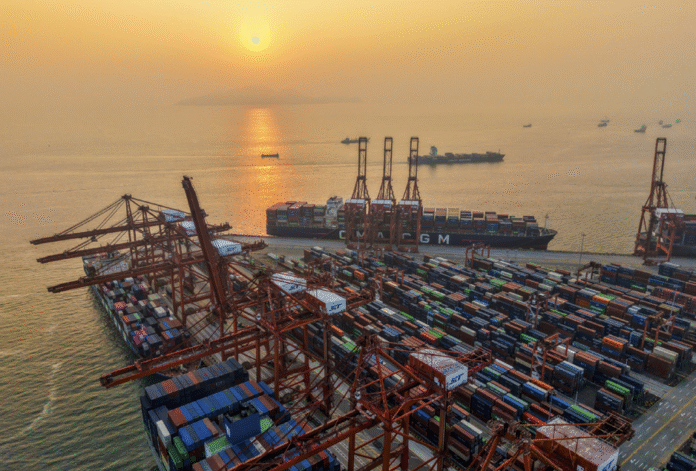
The steady growth of imports from APEC economies has helped Guangdong, China’s biggest foreign trader, reach a total trade volume of more than 6.16 trillion yuan in 2025, up 3.3 percent year-on-year, the statement said.

Guangdong’s trade with APEC economies remained steady and upbeat in the previous year, it said.

The province’s exports to APEC economies hit 3.82 trillion yuan, a year-on-year increase of 1.1 percent, while its imports from those economies grew at an even faster rate of 8.7 percent year-on-year, totaling 2.34 trillion yuan.

Hong Kong Special Administrative Region, the United States and Chinese Taiwan island were Guangdong’s top three trade partners among APEC economies in 2025.

Guangdong’s trade volume with the three APEC economies reached 1.28 trillion yuan, 945.32 billion yuan and 833.08 billion respectively last year, accounting for nearly 50 percent of the province’s total trade volume with APEC economies, it said.

Private enterprises recorded 3.77 trillion yuan in trade volume with APEC economies last year, up 4.1 percent and accounting for 61.2 percent of the province’s total trade volume with those economies, according to the statement.

Foreign companies and joint ventures achieved 2.17 trillion yuan trade volume with APEC economies, accounting for a 6.2 percent rise year-on-year and representing 35.2 percent, a 0.8 percentage points increase from 2024.


Article inline ad

Cross-Border Funds Pilot To Expand

0

By Zhou Lanxu and Ouyang Shijia | China Daily | Updated: 2026-01-31 

China is poised to expand nationwide a pilot policy that helps multinational companies to centrally manage cross-border funds, both in renminbi and foreign currencies, officials and analysts said, marking a notable step forward in the country’s financial opening-up.

 The policy, seen as nearing implementation, will help ease capital flows for foreign and Chinese firms expanding overseas, and will benefit more medium-sized multinational firms, they said.

 Li Bin, spokesperson and deputy head of the State Administration of Foreign Exchange, said the policy to support centralized cross-border fund management by multinational companies in renminbi and foreign currencies will be implemented nationwide.

 “It will further improve capital turnover efficiency and lower corporate financial costs,” Li said at a recent news conference.

 Industry analysts said the remarks suggest that the rules on centralized cross-border fund management for multinational companies, for which public consultation was conducted last year, are close to formal implementation.

 With a parallel program already in place for large multinational groups, the new policy rollout is expected to target medium-sized multinationals and form a nationwide, full-coverage framework for the cross-border cash pooling of MNCs in both renminbi and foreign currencies, marking progress in advancing capital account convertibility, they added.

 In 2023, SAFE launched pilot programs in Beijing and Guangdong province, including Shenzhen, for centralized cross-border fund management, covering the renminbi and foreign currencies.

 The pilots allowed medium-sized multinational groups to centrally manage quotas for external borrowing and outbound funding among member entities, improving corporate financial flexibility.

 Companies were encouraged to conduct centralized cross-border fund operations in the renminbi. Filing procedures and documentation requirements for fund usage were also streamlined to reduce corporate compliance costs.

 Lou Feipeng, a researcher at the Postal Savings Bank of China, said the pilot policy’s national rollout will help improve the efficiency of multinational corporations in cash pooling, reallocating and converting funds, and reducing financing costs and exchange rate risks.

 “For foreign-invested enterprises seeking to expand in China, the measures will enhance autonomy in fund management and strengthen operational resilience. For Chinese companies going global, they will facilitate the repatriation of overseas funds and improve global resource allocation.”

 He added that the policy is expected to feature moderate relaxations in areas such as fund transfers, foreign-exchange settlements and sales, reflecting a “prudent, orderly and risk-controllable” path toward financial opening-up.

 According to the draft rules of the pilot’s national rollout released in July last year, regulators will set quotas for external borrowing and outbound funding based on the net assets of MNCs’ member companies.

 Liu Chunsheng, an associate professor at the Central University of Finance and Economics, said that while previous policies mainly targeted large and mega multinational firms, the new one would extend coverage to medium-sized enterprises, signaling a more inclusive and comprehensive approach to capital-account convertibility.


Article inline ad

China Moves To Strengthen Disclosure On Public Investment Funds

0

By Zhou Lanxu | chinadaily.com.cn | Updated: 2026-01-30

China’s top securities regulator released on Friday draft revisions to rules on information disclosure by publicly offered investment funds, stepping up requirements on reporting investment returns to improve transparency and better protect investors.

According to the draft rules, the regulator will streamline disclosure items that are currently duplicated or similar across annual, semiannual and quarterly reports, while setting more tailored disclosure requirements based on the different functions of each type of report.

The draft adds new investor-focused indicators. Fund managers will be required to disclose in annual and semiannual reports the proportion of profitable investors over the past year for actively managed equity and hybrid funds, in a move aimed at guiding the industry to place greater emphasis on investor returns.

In addition, fund managers must disclose stock turnover ratios of relevant products in annual reports. The requirement is designed to strengthen transparency on investment behavior and portfolio stability, and to encourage fund managers and portfolio managers to adopt more prudent and rational investment approaches.

The regulator said that the draft rules are intended to enhance industry transparency, safeguard the lawful rights and interests of fund investors, and support the high-quality development of the public fund sector.

Some disclosure requirements will also be simplified or adjusted in line with higher-level regulations, industry practice and experience from mature overseas markets.

Public feedback on the draft rules will be accepted until March 2.


Article inline ad

China Updates Sustainability Disclosure Rules To Support High-Quality, ESG-Aligned Growth

0

By Zhou Lanxu and Zhang Chenxu | chinadaily.com.cn | Updated: 2026-01-30

China’s stock exchanges have issued revised guidelines for corporate sustainability disclosures, underscoring China’s ongoing proactive efforts to foster sustainable and high-quality growth among listed enterprises while aligning with international environmental, social, and governance standards.

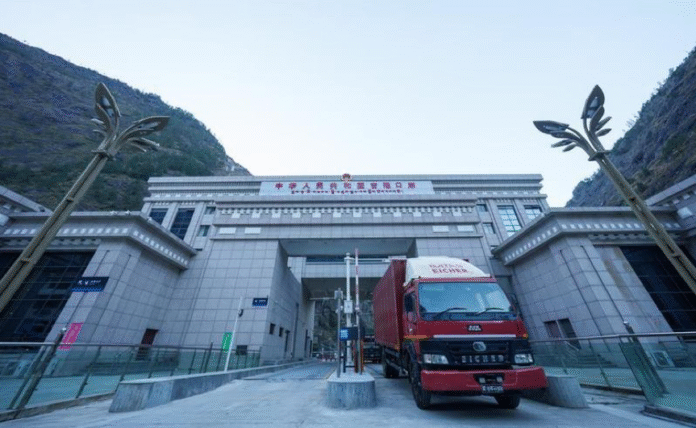
The Shanghai, Shenzhen and Beijing bourses, under the guidance of the China Securities Regulatory Commission, released revised sustainability reporting guidelines on Friday, following public consultation.

The guidelines come ahead of the mandatory ESG disclosures for eligible listed companies, set to be enforced in 2026, with the aim of refining environmental reporting standards and offering more precise, actionable guidance.

Covering pollutant emissions, energy consumption, and water resources, the revised guidelines offer detailed guidance and standardized methods to help firms better identify risks and opportunities, calculate data and disclose key information.

According to the Beijing Stock Exchange, the revision aligns with business realities, avoiding additional mandatory disclosures, and seeks to gradually raise listed companies’ awareness of environmental and resource conservation responsibilities.

Zhang Yan, deputy director-general of the Department of Listed Company Supervision at the commission, said that despite global fluctuations in the sustainability landscape, China remains committed to refining its disclosure system by striking a balance between international alignment and domestic priorities while adopting a phased, pilot-led approach to policy execution.

By 2025, the number of companies publishing sustainability reports reached 1,869 — representing about 70 percent of total market capitalization and effectively meeting investor demand.

Notably, 34.7 percent of all listed companies now provide these disclosures, a nearly ninefold increase since the end of the 13th Five-Year Plan period (2016-2020), according to official data.


Article inline ad

China Issues Work Plan To Foster New Growth Drivers In Service Consumption

0

Xinhua | Updated: 2026-01-30

BEIJING – China has released a work plan to accelerate the cultivation of new growth drivers in service consumption, as part of broader efforts to support the country’s high-quality development.

The plan, published by the General Office of the State Council, aims to further improve and expand the supply of services, improve the quality of service consumption, and better deliver benefits to the public.

Targeting key sectors such as transportation services, domestic services, online audiovisual services, sojourn tourism services, automotive aftermarket and inbound consumption, the plan calls for measures to boost growth by improving service supply, advancing pilot programs, fostering innovative consumption scenarios and strengthening talent development.

For potential sectors including performance services, sports event services, and emotion and experience-oriented services, measures will be taken to cultivate new momentum by refining incentive mechanisms, enhancing safety management, fostering high-quality brands, and building supporting platforms, per the plan.

It also underscores the need to strengthen policy support by improving standards systems, enhancing credit development, and increasing fiscal and financial support to provide solid safeguards for cultivating new growth points in service consumption.

Local governments and relevant departments have been urged to strengthen policy design, innovate support measures, improve the environment for service consumption, and formulate targeted support policies in light of local conditions.

Article inline ad

New Chip Completes Alibaba’s AI ‘Golden Triangle’

0

By Cheng Yu | chinadaily.com.cn | Updated: 2026-01-30

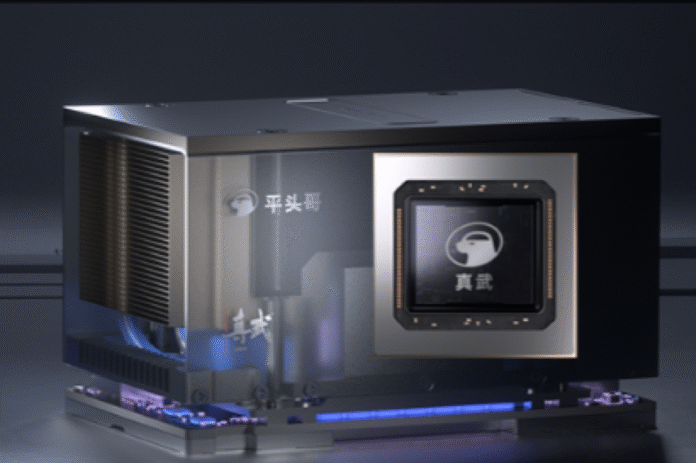
Alibaba Group’s chip unit Pingtouge quietly launched a high-end artificial intelligence processor called the “Zhenwu 810E” on Thursday.

The self-developed chip completed what industry experts called Alibaba’s AI “golden triangle” – combining AI model development at Tongyi Lab, cloud services at Alibaba Cloud and chips from Pingtouge.

Zhenwu 810E is built on a proprietary parallel computing architecture and inter-chip communication technology, supported by a fully in-house software stack. Many charts placed Alibaba’s PPU alongside chips from Huawei and the Nvidia.

The chips are already deployed in multiple large-card clusters on Alibaba Cloud, the company said, serving more than 400 customers, including the State Grid of China, the Chinese Academy of Sciences, Xpeng Motors and Sina Weibo.

Pingtouge was established in 2018 after Alibaba acquired C-Sky Microsystem, then China’s only domestic developer of embedded CPU intellectual property, and folded it into its Damo Academy research arm.

The unit is now regarded as one of the group’s core technology businesses.


Article inline ad

Sino-ASEAN Ties Seen As Key To Forging Inclusive AI

0

By Cheng Yu | China Daily | Updated: 2026-01-29 09:30

ASEAN economies are seeking to cooperate to shape a future for artificial intelligence that is inclusive, skills-driven and ethically grounded, said industry experts at a major international forum recently.

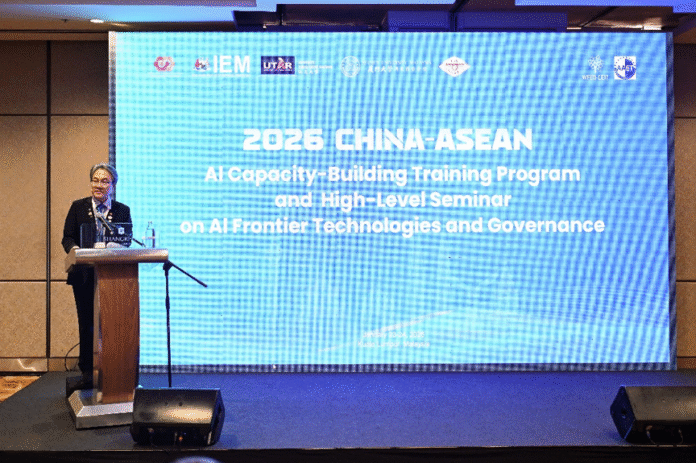
That push for a stronger Global South voice in AI governance took center stage at the 2026 China-ASEAN AI Capacity-Building Training Program and High-Level Seminar on AI Frontier Technologies and Governance in Kuala Lumpur, Malaysia, where over 100 representatives, officials, and academics from China and ASEAN countries gathered to link technical cooperation with policy coordination.

Hou Zengguang, vice-president of the Chinese Association of Automation, said, “Through open cooperation, knowledge sharing, and joint capacity building, China and the ASEAN can make AI a genuine global public good that serves sustainable development worldwide.”

Hou outlined a vision in which emerging economies play a more active role in both technological innovation and governance design. Drawing on China’s experience, he said the country has accumulated strengths in research, technology development and industrial application in automation that can contribute to broader international progress.

“ASEAN member states can build the capacity needed to ensure AI remains inclusive and beneficial, particularly for developing economies seeking to upgrade their industries without being locked into external technological dependencies.”

Across Asia, governments are accelerating the adoption of AI in manufacturing, transport, education and public services. But participants warned that without stronger domestic talent pools and governance frameworks, several countries could find themselves reliant on imported systems they have little role in shaping.

Aung Kyaw Myat, president of the Federation of Engineering Institutions of Asia and the Pacific, said that ASEAN, including Myanmar, stands at a critical juncture.

“If we do not act strategically, we risk becoming passive consumers of AI technologies developed elsewhere. Millions of workers face potential disruption, and without capacity building, the AI divide between nations and institutions will widen.”

That sense of urgency is increasingly shared across emerging economies, where AI is viewed both as a tool to leapfrog stages of development and as a potential driver of new inequality if access to skills and infrastructure remains uneven.

Hou said closer China-ASEAN cooperation can help address those risks by pairing technological exchange with talent development and governance dialogue. Regional platforms, he said, can accelerate the move from pilot projects to scalable industrial deployment while ensuring that safety, standards and ethics keep pace with innovation.

International organizations are also seeking to anchor the AI boom in shared standards. Shahbaz Khan, director of the UNESCO Regional Office for East Asia, pointed to UNESCO’s work on global AI ethics and education guidance as examples of efforts to keep human development at the center of technological change.

UNESCO, he said, sees cooperation among developing countries as essential, particularly on sensitive issues such as algorithmic bias, data protection and unequal access to computing power.

His remarks reflected a broader diplomatic current: emerging economies are increasingly coordinating not just on trade and infrastructure, but also on digital governance.

While high-level principles featured prominently, much of the forum’s discussion focused on practical capacity building — from basic AI literacy to advanced research and industry partnerships.

“AI capacity building rests on four pillars: human resource development, infrastructure and data readiness, ethical governance, and research and innovation ecosystems,” Aung Kyaw Myat said, stressing that countries must move “from using AI to building and innovating with AI.”

chengyu@chinadaily.com.cn


Article inline ad