Wednesday, November 25, 2026

Home Blog Page 83

China To Improve Consumption Tracking With Strengthened Statistics Work

0

Xinhua | Updated: 2026-01-30

BEIJING – China will improve its tracking of consumption market dynamics amid efforts to foster a robust domestic market, according to a national statistics conference which concluded on Thursday.

At the conference, the National Bureau of Statistics (NBS) revealed that it will strengthen its statistical monitoring of new consumption models, emerging business forms and changes in consumption structure. Efforts will include strengthening the measurement of regional services sales and refining the measurement of online services sales.

The NBS said it will enhance its data estimation, and optimize its methods of measuring total sales of goods and services. It will pay particular attention to improving its statistical monitoring of the services consumption market to reflect market trends more accurately.

The expansion of domestic demand will top China’s major economic priorities for 2026, according to the Central Economic Work Conference last month, which also outlined plans to implement consumption-boosting campaigns, and to increase the incomes of the country’s urban and rural residents. The meeting also called for efforts to promote services consumption.

China recently released a plan to accelerate the cultivation of new services consumption growth drivers, aiming to improve and expand the supply of services, and to improve the quality of services consumption. The plan covers key sectors such as transportation services, domestic services, online audiovisual services, tourism services, the automotive aftermarket and inbound consumption.

Article inline ad

Shanghai Ramps Up Computing Capability To Become Global Computing Hub

0

By WANG YING in Shanghai | chinadaily.com.cn | Updated: 2026-01-30

Shanghai looks to moderately step up its construction of intelligent computing facilities during the 15th Five-Year Plan (2026-30) period to build an independently controllable intelligent computing industry, according to official sources.

Shanghai will promote the building of intelligent computing infrastructure at a measured pace in order to lift the city’s computing power industry to a new level, create an open and shared intelligent computing ecosystem, and constantly optimize policies and supports for capital and talents, Pan Yan, deputy director of the Shanghai Commission of Economy and Informatization, said during a forum on intelligent computing on Jan 27 in Shanghai.

“Shanghai has achieved an intelligent computing capacity of 120,000 peta-FLOPS — quadrillion floating-point operations per second — enabling the city to build a more complete intelligent computing industry, while accelerating the application of computing technologies across key industries,” Pan said.

Calling computing power the productivity core of the digital economy, Wang Xiaoli, deputy Party secretary of China Academy of Information and Communications Technology (CAICT), said computing power has become an important driver of China’s economic transformation, upgrading, and the cultivation of new growth drivers.

“CAICT and Shanghai will deepen collaboration to fully support the city’s development into a globally influential computing power hub,” Wang said.

According to Wang, the Ministry of Industry and Information Technology has launched a series of measures to promote the construction of computing power infrastructure — including strengthening the foundation of computing power infrastructure, exploring core application scenarios, and innovating new computing power service models.

Article inline ad

High-Level Dialogue Key To Bolstering Business Confidence

0

By SHI JING in Shanghai | chinadaily.com.cn | Updated: 2026-01-30

British Prime Minister Keir Starmer’s visit to China — the first of its kind since 2018 — reflects the British government’s objective to create a mature, consistent, comprehensive, and strategic relationship between the two countries, Stuart Dunn, executive director of British Chamber of Commerce Shanghai, said.

“Any positive steps by the British government to continue momentum in building a stronger relationship with China are welcomed by the British business community in China,” Dunn said.

The representatives of the delegation have mirrored the economic focus of the visit, he said.

The China-UK trading relationship is worth over 100 billion pounds ($138 billion) annually, according to Dunn, with Chinese investment in the UK generating about 370,000 jobs every year.

“Open, mature, and practical dialogue is back at the top level and that matters to business confidence in both countries,” Dunn said. “The UK and China can support each other to achieve their economic growth goals.”

Thanks to China’s rich supply of skilled labor, financial incentives, world-class facilities, and the country’s logistical significance in the Asia Pacific region, a large number of UK industry giants — including pharmaceutical company AstraZeneca, automaker Jaguar Land Rover, beverage company Diageo, and consumer goods provider Unilever — have increased their investment in research and development in China over the past few years.

Dunn foresees increased cooperation between the two countries in the upcoming years, especially given China’s goal of high-quality development.

On one hand, UK’s strength in finance, legal, consulting, insurance, and asset management addresses China’s goal to promote high-quality services during the 15th Five-Year Plan (2026-30) period. These professional services providers’ wider presence in China will not only support UK investment in China, but will also enable UK service companies to better assist Chinese companies’ outbound reaches, he said.

On the other, UK companies specializing in industrial technologies, engineering, automation, and high-end components production can also explore plenty of opportunities in China as advanced manufacturing and industrial upgrading have been underlined in China’s 15th Five-Year Plan, Dunn said.

China’s rising healthcare demand will be translated into deeper UK involvement in the sectors of pharmaceutical, medical technology, consumer health, and hospital solutions in China, according to Dunn.

Green transition is another major theme for deeper China and UK cooperation, benefiting companies specializing in climate solutions, clean energy, energy efficiency, low carbon services and green finance, he added.

Article inline ad

China’s Gold Market Reaches Record Highs In 2025, Report Says

0

By Zheng Xin | chinadaily.com.cn | Updated: 2026-01-30

Driven by an unprecedented flood of capital into gold exchange-traded funds (ETFs) and record-breaking investment in physical bars and coins, China’s gold demand surged to a record high in terms of value in 2025, according to a World Gold Council (WGC) report released on Thursday.

The WGC’s report on global gold demand trends reveals that the world’s largest gold consumer saw a dramatic shift in investor behavior as safe-haven demand intensified.

The Chinese gold ETF market experienced a landmark year, with cumulative inflows totaling 110 billion yuan ($15.2 billion) in 2025, it said.

Total assets under management (AUM) for domestic gold ETFs skyrocketed by 243 percent — ending the year at 241.8 billion yuan — while physical gold holdings backed by these funds soared to 248 metric tons.

The momentum peaked in the fourth quarter, which saw 51 billion yuan in inflows — the strongest single-quarter performance in the market’s history.

While volume growth was steady, the total value of gold consumed in China reached new heights due to rising global prices, the council said.

China’s total gold demand reached 1,003 tons, a 6 percent increase year-on-year and the highest volume since 2021. In monetary terms, demand hit an all-time high of 796 billion yuan, a massive 53 percent jump compared to 2024, it said.

According to the council, a sharp divide emerged between investment products and the jewelry sector as high prices impacted consumer choices.

Investment demand was exceptionally robust, with investors purchasing a record 432 tons of gold bars and coins, up 28 percent from the previous year.

Higher price tags dampened appetite for gold jewelry, with demand falling 25 percent to 360 tons. However, total spending in the jewelry segment still managed to rise 8 percent to 281.4 billion yuan, it said.

The WGC anticipates that the strong momentum for gold investment in China will likely persist into the first quarter of 2026.

Consumer demand is expected to find support from “self-reward” and gift-giving purchases ahead of the Chinese Lunar New Year. Additionally, safe-haven demand is projected to remain elevated throughout 2026, underpinning a continued steady outlook for gold investment in the region, it said.

Article inline ad

CGN Expands Clean Power Portfolio

0

22 new units by the energy giant under way as China advances green transition

By Zheng Xin | China Daily | Updated: 2026-01-30

China General Nuclear Power Group, the country’s largest nuclear power plant operator by installed capacity, reported a significant expansion of its clean energy portfolio, with operational capacity reaching 113 million kilowatts by the end of 2025.

The State-owned giant successfully navigated the 14th Five-Year Plan (2021-25) by securing approvals for 16 new nuclear power units, bringing its total capacity — including operational and under-construction projects — to over 56 million kW.

During the five-year period, CGN accelerated its nuclear program to support Beijing’s carbon neutrality goals. It commenced construction on 10 units and meanwhile connected four units to the grid, said Ning Xiaoping, president of China Nuclear Power Engineering Co Ltd, a subsidiary of CGN.

By the end of 2025, CGN was simultaneously advancing the construction of 22 nuclear power units, ranking the company first in the world for the number of approved nuclear units currently under construction, he said.

“This milestone further cements CGN’s position as a dominant force in the global nuclear energy landscape,” said Ning.

“The rapid development of these units is a central pillar of China’s national strategy to lead the global transition toward clean energy. It also ensures a steady pipeline of high-capacity, carbon-free power for the country’s evolving grid.”

Currently, CGN manages a fleet of 28 operational nuclear units, ensuring its continued status as the national leader in nuclear power scale.

Industry experts believe CGN’s massive units under construction and 16 approvals during the 14th Five-Year Plan act as the primary engine for China’s national nuclear expansion.

By maintaining the country’s largest fleet, the group provides the stable, baseload power necessary to offset the intermittency of the country’s surging wind and solar sectors, said Lin Boqiang, head of the China Institute for Studies in Energy Policy at Xiamen University.

China is set to become a global leader in operational nuclear power capacity by 2030, as it is progressively scaling up its nuclear infrastructure to claim the top global position within the next few years.

With the new medium — and long-term development plan for nuclear energy still under development, China Nuclear Energy Association anticipates the nation’s nuclear capacity to reach 110 GW by 2030 and 150 GW by 2035.

According to the association, nuclear power will play a vital role as a key substitute for high-carbon energy sources and a mainstay for the stability of the new power system.

CITIC Securities said that with the accelerated approval of nuclear power projects, investments in new nuclear power plants in China were expected to reach 231 billion yuan ($33.3 billion) by the end of 2025, further stimulating the country’s related industry chain.

The association said that by 2024, China had achieved 100 percent domestic origin for key main equipment in the nuclear power sector, ensuring the independent control of key component technologies.

According to Ning, China has reached a significant milestone in nuclear energy self-reliance, with the equipment localization rate for new Hualong One nuclear power units now surpassing 95 percent.

Hualong One is China’s third-generation nuclear power technology with full intellectual property rights. It is also one of the most widely accepted series of third-generation nuclear power reactors in the world.

This breakthrough, which also aligns with the nation’s 14th Five-Year Plan objectives to modernize the energy sector through innovation-led growth, marks a critical step in China’s strategy to eliminate its dependence on foreign supply chains for its primary third-generation reactor technology.

CGN’s domestic renewable energy segment experienced leapfrog development, with operational wind and solar capacity surpassing 70 million kW — a nearly threefold increase compared to the end of 2020.

In 2025 alone, CGN added 13.29 million kW of new domestic renewable capacity, marking its transition into a developer capable of delivering more than 10 million kW of new projects annually.

Beyond its borders, CGN’s clean energy footprint now spans 18 countries and regions, with a controlling operational capacity exceeding 13 million kW. To date, CGN’s overseas projects have delivered more than 370 billion kWh of clean electricity.


Article inline ad

Xizang’s Trade Surges On Stronger Global Ties

0

By PALDEN NYIMA and DAQIONG in Lhasa | China Daily | Updated: 2026-01-30

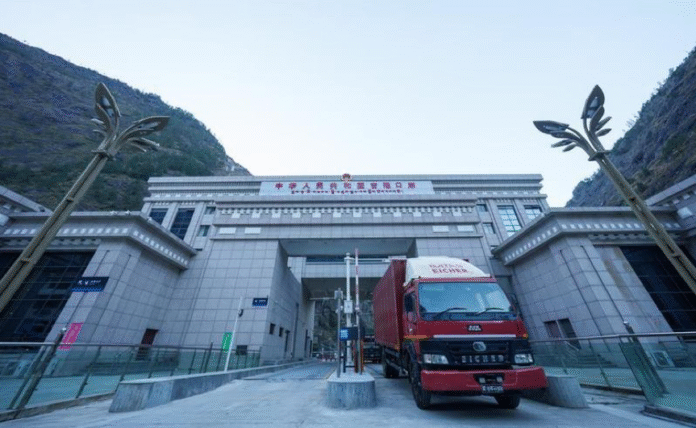
Xizang autonomous region has seen its import and export value of goods reach an estimated 8.47 billion yuan ($1.21 billion) in 2025, according to Lhasa Customs.

In 2025, 226 enterprises in Xizang achieved trade growth, a year-on-year increase of 12.4 percent. Private enterprises remained the driving force, contributing 85.7 percent of the total trade value, or 7.26 billion yuan. Foreign-invested enterprises saw a 65-fold surge in their trade value to 613 million yuan.

Tenzin, a Lhasa Customs official, said Xizang is transforming from relying only on traditional border trade to leveraging diversified supportive strategies such as processing trade and cross-border e-commerce.

“General trade, including digital trade channels, reached 4.47 billion yuan, serving as a primary engine of economic growth, border small-scale trade maintained stability with imports and exports totaling 2.82 billion yuan,” said Tenzin.

Capitalizing on its strategic geographic advantage as a gateway to South Asia, Xizang has deepened cooperation with its neighbors while enhancing connectivity via comprehensive logistics infrastructures. The “South Asia Freight Train” and expanded rail-road combined transport systems have elevated trade efficiency, he said.

Notably, domestic new energy vehicles were shipped to Nepal within just 10 days, underscoring Xizang’s role in promoting environmentally friendly trade routes.

In 2025, Tibetan ports exported 12,938 NEVs, achieving a 6.8 percent year-on-year growth, Tenzin said. Additionally, the opening of an international cargo terminal at an aviation port significantly boosted air freight capacities.

Goods worth 440 million yuan were transported via airfreight in 2025, offering efficient solutions for high-value and time-sensitive cargo.

Xizang has also made strides under the Belt and Road Initiative by building partnerships with a wider range of global trade partners.

In 2025, Xizang conducted trade with 155 countries and regions. The largest trading partners were Nepal, Australia and Germany.

“Xizang’s trade with Nepal constituted 23.2 percent of the total value of China-Nepal trade, cementing their strong economic ties,” said Tenzin. Furthermore, trade with BRI partner markets reached some 5.76 billion yuan, while exchanges with South Asian nations amounted to 4.03 billion yuan, he added.

Xizang’s distinct local products are gaining international acclaim as they find new markets abroad. For instance, wine from a vineyard in Lhokha’s Sangri county entered the Hong Kong market in 2025.

“We are proud that our vineyard, located at 3,600 meters above sea level, benefits from its unique environment, with strong ultraviolet light ensuring minimal pest problems and allowing organic cultivation,” said Jing Anjie, a manager at local brewer Phagdru Rongshun (Pure Land) Manor Co Ltd.

“Support from local customs authorities streamlined the export process with online declarations and paperless procedures, paving the way for our success.”

Efforts to promote Xizang on the global stage yielded encouraging results in 2025. Tsering Dorje, an official at the Lhasa Bureau of Commerce, revealed that the region had actively implemented strategies to both “go global” and “bring in” international cooperation last year.

“Xizang enterprises debuted at expos and trade shows in Singapore, Nepal and Hong Kong, where cooperative procurement agreements worth millions were secured,” he said.

Xizang’s second Lhasa Import Expo also achieved total sales of 136 million yuan, showcasing its growing attractiveness to international traders, he said.

“Tibetan cultural products and plateau specialties gained global recognition through events like the Canton Fair, solidifying Xizang’s reputation as a hub for both traditional heritage and innovation.”

Article inline ad

HK Home Prices Post 1st Annual Rise In 4 Yrs

0

By GABY LIN in Hong Kong | China Daily | Updated: 2026-01-30

Hong Kong’s home prices recorded their first annual increase in four years, with the official price index climbing 3.25 percent in 2025.

Analysts believe the special administrative region’s residential property market has bottomed out, and that prices are poised to continue rising this year.

Buoyed by a robust equity market, a series of interest-rate cuts, as well as policy incentives from the SAR government, the housing market has finally emerged from a prolonged slump since 2021.

According to the latest data from the Rating and Valuation Department, the city’s overall private home price index rose for a seventh straight month in December to 298.6, up 0.23 percent from November. That also represented a 3.25 percent increase compared with December 2024, when the gauge stood at 289.2.

The price index for smaller and medium-sized units — those under 100 square meters — also posted a year-on-year increase of 3.4 percent in December, the figure showed.

“The stabilization of home prices stems mainly from brisk transactions and a softer interest-rate environment,” said Rosanna Tang, executive director and head of research at Cushman & Wakefield in Hong Kong.

Tang noted that market sentiment has significantly brightened, as banks in Hong Kong had dropped mortgage rates in response to several rounds of the US Federal Reserve’s rate cuts last year, further lowering the cost of purchasing a property.

“We believe the residential market has bottomed out after an adjustment phase, with prices set to grow by around 5 percent in 2026,” she added.

Benny Sham, an analyst at Midland Realty’s research center, attributed the upturn to factors including economic growth, rising rents, and a decreasing inventory.

He expects the sector to stay buoyant, adding that home prices are likely to rebound by about 10 to 15 percent this year.

Norry Lee, JLL’s senior director of project strategy and consultancy, said the equity market’s strong run will give the residential market a further lift in the near term.

Hong Kong’s benchmark Hang Seng Index concluded 2025 with a nearly 28 percent rally, posting its best performance since 2017, according to Hang Seng Indexes Co Ltd. Total market capitalization amounted to HK$47.4 trillion ($6.07 billion) at the end of December, up 34 percent from HK$35.3 trillion in the same period of 2024.

“Anticipated interest rate cuts in 2026 could further strengthen investor sentiment,” Lee added. However, the analyst remains cautious, citing the high level of unsold inventories and ongoing macroeconomic uncertainties that might continue to weigh on the pace of market recovery.

More than 62,800 agreements for the sale and purchase of residential units were recorded with the SAR’s Land Registry last year, including 20,540 primary market sales, an increase of 18.32 percent from 2024.

Article inline ad

Chinese-Partnered Team Reconstructs Land Habitat, Urban Economy Through Co-Existence Model

0

By Yin Mingyue | chinadaily.com.cn | Updated: 2026-01-29 

A Chinese student-partnered team at Columbia University in the United States is promoting an innovative integration of urban land economy and ecological value, offering a novel paradigm for reutilizing underutilized urban land and activating community economy.

The “Permeable City” project — crafted by the GSAPP team at Columbia — has garnered the Architecture Master Prize 2025 Student Winners in Urban Design Category Best of Best, due to its innovative arrangement.

Du Ruonan, a member of the team, said that — in terms of community economic activation — the project constructs a shared infrastructure system with the ground as the core, transforming spatial redundancy into economic resources.

The project site, located in Rothneusiedl, Vienna, faces a problem of urban expansion and land carrying capacity, and sits in one of the lower-income districts in Austria. It also needs to face issues such as the accessibility of fresh food, the conditions for daily outdoor activities, and community-scale care infrastructure.

Originating from Otto Wagner’s vision of a “Great City”, which binds the idea of “neatness-cleanliness” with the aesthetic of modernity, and accomplishing this binding through “smooth surfaces”, traditional urban planning sees hardened ground as the core standard for hygiene and order. However, Austria is relatively scarce in arable land compared to other European countries.

Du said their “Permeable City” project aims to restructure the land use logic and tap into the economic potential of idle land by reversing the proportion of hard and permeable surfaces in the city. The core of the project lies in a network of 200 shared courtyards — flexibly planning uses through a neighborhood co-governance model as well as breaking the boundaries between traditional farmland and urban space.

Meanwhile, large courtyards near transportation nodes serve as specialized farmland, producing directly for the local market and reducing circulation cost. Rented courtyards are open to residents — satisfying their farming needs while driving income growth for local farmers through cooperation — forming a small, closed loop agricultural economy.

Du stressed that the project adhered to low-cost and sustainable economic principles at the construction level, utilizing local materials such as bricks, straw bales, and wooden frames.

From an economic perspective, the “Infiltration City” broke through the traditional model of “single development” of urban land, maximizing land value through the symbiotic design of ecology and economy.

“It proved that urban health and economic vitality can develop synergistically through spatial reconstruction — providing a replicable path for solving the economic difficulties of low-efficiency land use and low-income communities — and injecting new economic momentum into future urban renewal,” Du added.

Du remarked that from the perspective of the relationship between people and land, the “Permeable City” reopened the logic of “hardening-isolation-disinfection-style security” that modern cities have long relied on, allowing soil, rainwater, plants, and microorganisms to return to daily living as manageable living media.

“Health is no longer defined solely by closed boundaries and distance control, but generated by the accessible, adjustable, and maintainable relationship between people and land,” Du said, noting that courtyards and permeable surfaces form a continuous ecological interface, where rainwater is absorbed and purified, heat islands and dust haze are mitigated, and daily walking paths and shared food systems integrate nutrition, activity, and community mutual assistance into the living structure.

“Modern healthy living thus emerges as a symbiotic system with land as the infrastructure, continuously rebuilt through perceivable natural processes and participatory community mechanisms,” Du said.

Article inline ad

Chinese New Year Delivers Major Sales Boost For Norwegian Salmon

0

By Wang Zhuoqiong | China Daily | Updated: 2026-01-29

China’s post-1990s and post-2000s generations have become a significant force in transforming consumption during the Spring Festival holiday season, with products that are healthy, emotionally engaging and social media-friendly gaining prominence.

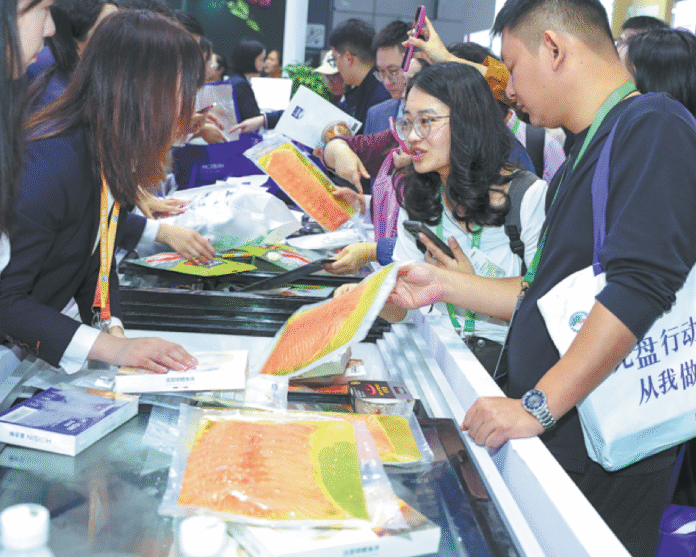
Among these, salmon has emerged as a key festive staple, increasingly chosen for family gatherings, holiday meals and even as gifts.

According to the 2025 Freshippo Spring Festival Consumption Report, sales of ready-to-eat salmon surged by 66 percent year-on-year during the 2025 Chinese New Year holiday, with peak demand occurring on Chinese New Year’s Eve.

Salmon’s growing popularity during Chinese New Year reflects both its alignment with evolving consumer preferences and the changing nature of holiday meals.

As consumer behavior evolves, the upcoming holiday season has become an important consumption window for Norwegian salmon, creating new growth opportunities for the industry.

The Norwegian Seafood Council has highlighted the significance of this trend, noting that the festive season has become an increasingly critical time for salmon sales in China.

In 2025, Norwegian salmon exports to China reached 90,906 metric tons, marking a 99 percent year-on-year increase. The value of these exports also saw a significant jump, rising to 8.1 billion Norwegian kroner ($840.4 million), a 59 percent increase compared to the previous year. This growth is attributed to a sharp rise in Chinese salmon consumption and Norway’s increased market share in the country, said NSC.

As of November, imports of Atlantic salmon into China had risen by 48 percent year-on-year, with Norway’s market share growing from 41 percent to 57 percent. Sigmund Bjorgo, China director of the NSC, said: “This growth is driven by the high popularity of salmon, competitive pricing and the large supply that China demands. Additionally, expanding sales channels and improving distribution in smaller Chinese cities have significantly contributed to this success.”

The NSC’s export results for 2025 show strong growth across multiple categories. Total exports for the year reached 2.8 million tons, with a record export value of 181.5 billion Norwegian kroner, up 4 percent compared to 2024. This equates to 38 million seafood meals consumed globally every day.

Christian Chramer, CEO of the NSC, said: “2025 was a challenging year with lower quotas and high prices for our key species. However, the year was characterized by strong volume growth in salmon exports, and despite a lower salmon price, it was still a record year for Norwegian seafood exports in terms of value.”

Norwegian seafood’s strong performance is not just a product of favorable international trade conditions, but also a result of strategic efforts. The NSC has focused heavily on market expansion in China, where demand for Norwegian seafood has soared.

Alongside salmon, Norwegian coldwater prawn has also seen significant growth in China. In 2025, exports of Norwegian coldwater prawn to China exploded, reaching 8,392 tons and generating an export value of 450 million Norwegian kroner, an increase of 244 percent and 345 percent, respectively, compared to the previous year. China is now the largest global market for Norwegian coldwater prawn and also the fastest-growing market.

The NSC has actively promoted Norwegian coldwater prawn in China, with initiatives like participating in the 2025 Asia-Pacific Aquatic Products Expo and Dalian Seafood Festival in May, where Norwegian suppliers showcased their products to Chinese buyers.

This was followed by additional appearances at major industry events like the Shanghai International Fisheries & Seafood Exhibition and the China Fisheries & Seafood Expo. These efforts have helped raise awareness and establish a stronger market presence for Norwegian seafood in China, according to the NSC.

China’s evolving consumption trends and the growing popularity of products like salmon present significant opportunities for Norwegian seafood exporters. As Chinese consumers increasingly prioritize health, convenience and premium ingredients, Norwegian seafood, especially salmon, has positioned itself as a key player in both festive and everyday consumption.

Article inline ad

Chile Forging Closer Economic Ties With Nation

0

Bilateral trade surpassed $61 billion in 2024, 8.6 times the level in 2006, with Chilean cherries a key highlight

By Wang Zhuoqiong | China Daily | Updated: 2026-01-29

Over the past year, Ivan Marambio, president of Frutas de Chile, has made five trips to China. He spent two weeks in the country in Jan, continuing his frequent visits to maintain close ties with the world’s largest importer of Chilean fruit.

“I am trying to keep track of my periodic visits to China,” Marambio said, underlining the importance of constant engagement with the growing, fast-evolving market.

China has become a cornerstone for Chile’s fruit industry, particularly cherries. “China is our biggest market,” Marambio said. “We are sending almost 40 percent of all the fruit Chile exports to China. In the case of cherries, about 90 percent comes here.”

The connection between Chile’s exporters and Chinese consumers has grown stronger, and now, Frutas de Chile, which represents more than 200 exporting companies, aims to deepen that relationship even further.

“Now, we want to take the relationship with Chinese consumers to the next level,” Marambio added. “We are investing in strategies to get closer to the consumers and better understand what they want. But this is not only about investing money — it’s about investing in growing consumption. We want to grow our relationship with Chinese consumers in all the ways that we can. We want cherries to become part of everyday life, expanding how and when people enjoy them.”

Bilateral trade

This growth has been fueled by robust bilateral economic exchanges. Chilean Ambassador to China Pablo Arriaran highlighted the dramatic expansion of ties between the two nations since the Chile-China Free Trade Agreement came into effect in 2006.

“Bilateral trade reached $61.66 billion in 2024, 8.6 times the level in 2006, representing the highest per-capita trade value between China and any South American country,”Arriaran added.

Chilean cherries, in particular, have become a key highlight in this flourishing trade. During the 2024/25 season, Chile exported nearly $3.3 billion worth of cherries to China. “With their auspicious red color conveying the warmth of the Chilean sun during China’s winter, cherries have become a symbol of the close ties between our two countries,” Arriaran said.

While the volume of exports has slightly dipped this year, a 12.1 percent decrease compared to the same period last year, Frutas de Chile remains optimistic about the season.

“The market this year is a little bit different,” Marambio said. “We had an early harvest, so the season is 7 to 10 days ahead of schedule. We expect a slightly lower volume than last year during January and February, but we trust the work we’ve done in the offseason and during this season.”

As a result of the early harvest, the cherry market in China is seeing some price fluctuations this year. According to data from Beijing Xinfadi wholesale market, wholesale prices for imported cherries have dropped from 36 yuan ($5.2) per 500 grams in 2024 to 26 yuan in January 2026, a clear reflection of supply chain shifts and changing demand patterns. According to Sunhola Gaobeidian wholesale market, due to weather conditions in Chile and an earlier harvest, the supply window for cherries this season has been shortened. Shipments are expected to decline significantly in February, with tighter availability around Spring Festival.

Despite these challenges, Marambio remains focused on the consistent quality of Chilean cherries as the driving factor behind their pricing power.

“The core advantage of our fruit comes from the quality of the fruit that Chile offers to the world,” he said. “That is our main strength, and we grow with quality, and our members adapt to how the market behaves.”

Expanding awareness

While Chilean cherries have already established strong awareness in China’s first-tier cities like Beijing and Shanghai, the focus is now increasingly shifting to regional markets. Claudia Soler, executive director of the Chilean Cherry Committee, emphasized the untapped potential in second — and third-tier cities, where the fruit is less well known but holds significant growth opportunities.

“We have a very high awareness in the main cities, but still, we need to work more in developing regional China,” Soler said. “Tier-two and tier-three cities offer huge growth potential, and our marketing strategies are evolving to target these areas.”

In major cities, Chilean cherries are transitioning from being a premium gift item to an everyday snack, in line with shifting consumer behaviors. “We’re trying to get the consumers to understand the benefits of cherries,” Soler added. “Cherries fit very well with the growing healthy eating trends. It’s a nutritious product that’s great for daily consumption.”

One of the new initiatives from Frutas de Chile is the Chilean Cherry Ice & Snow Festival, launched in Changchun, Jilin province. The festival is part of a nationwide promotion linking winter sports with Chilean cherries, tapping into China’s growing passion for winter activities like skiing.

“The idea is to connect our cherries with winter sports to create a fun and exciting experience for consumers,” said Soler. “Our target audience — people who enjoy skiing and winter resorts — is very similar to the consumers who buy our cherries. It’s a creative way to engage them and position cherries as a premium product during the winter months.”

“Consumers are looking for new experiences, and cherries offer a premium, healthy indulgence that fits into their lifestyle,” Soler added.

Attracting consumers

Frutas de Chile is also addressing logistical challenges to improve the speed and efficiency of cherry exports to China. Ten years ago, most shipments went to ports in Hong Kong or Guangzhou, but now, direct routes have expanded to Shanghai and Tianjin, reducing delivery times from 30 days to just 22 days.

“Cherries are a perishable product. The faster we can get them to consumers, the better their condition and quality will be,” Soler said. The move to more direct shipping routes is one of several efforts to optimize the supply chain and ensure the freshest product reaches consumers in China.

Despite the competition, Marambio believes in the value of collaboration within the cherry growers in China. “It’s not a competition for us,” he said. “We want consumers to buy cherries year-round. As long as the product is high-quality, it benefits everyone. Our goal is to keep elevating the cherry category as a whole.”

Article inline ad