Wednesday, November 25, 2026

Home Blog Page 84

AI Injects New Impetus Into Gaming Sector

0

Chinese publishers ride high-tech to secure 35% of UAC in overseas markets

By Ma Si and Chen Bowen in Haikou | China Daily | Updated: 2026-01-29

Artificial intelligence has dramatically increased the speed and volume at which games reach the market, according to a recent report released by mobile analytics firm AppsFlyer.

AppsFlyer said that AI-enabled production coincided with a sharp increase in advertising across iOS and Android in 2025, while creative output scaled rapidly across all spending tiers, with top gaming advertisers producing between 2,400 and 2,600 creative variations per quarter, up 25 to 30 percent year-on-year.

The report is based on anonymized, aggregated data from 9,600 gaming apps worldwide, analyzing 24.8 billion total installs across iOS and Android during 2025, AppsFlyer said.

To manage rising marketing volume and fragmentation, AI-enabled tools became a common part of daily workflows, with 46 percent of AI assistant queries focused on reporting and performance breakdowns, reflecting the need for faster visibility as data volumes grew.

“AI has dramatically increased the speed and volume at which games and marketing assets reach the market,” said Adam Smart, director of product, gaming at AppsFlyer. “The result is not a shortage of creativity, but a surplus of it. As paid activity and creative supply expand faster than player attention, marketing success depends on how effectively teams can measure, interpret and act on an increasing volume of fragmented signals.”

China-headquartered publishers captured 35 percent of global gaming user acquisition cost outside China. Their share grew by 22 percent year-on-year, with gains strongest on Android and across competitive Western markets including the US, the UK, Germany and France, the report stated.

The trend is in line with the growing overseas influence of Chinese gaming companies. Income generated by Chinese independently developed games in overseas markets exceeded $9.5 billion in the first half of 2025, up 11.07 percent from a year earlier, according to the China Game Industry Report released by the Game Publishing Committee and Expert Committee on Game Industry Research.

The United States was the biggest overseas market for Chinese games, taking up 31.96 percent of the market share, followed by Japan and South Korea. China-developed simulation games were the most popular among overseas users, bringing in 43.33 percent of the total overseas income.

Eyeing the big opportunities, local governments are moving rapidly. Hainan province, for instance, is quietly transforming into an important hub for the country’s digital cultural industry, particularly in the realm of game exports. The Hainan Free Trade Port Digital Cultural Export Industrial Park located in Chengmai county, Hainan, is already home to nearly 2,000 gaming companies.

Xu Tao, magistrate of Chengmai county, said Chengmai will further intensify its efforts in the “overseas expansion” sector this year, scaling up operations across five key areas, including gaming and cross-border livestreaming e-commerce.

In the field of game exports, the county will upgrade the public service platform for global market expansion of Chinese games, aiming to have over 20 million overseas registered users of the platform, Xu said.

Article inline ad

Astrazeneca Announces $15b Investment In China

0

By Li Jing | chinadaily.com.cn | Updated: 2026-01-30

AstraZeneca announced on Thursday that it plans to invest more than 100 billion yuan ($15 billion) in China by 2030 to expand its pharmaceutical manufacturing and research and development footprint.

The British drugmaker said it will leverage China’s scientific research strengths and advanced manufacturing capabilities, as well as cooperation between the Chinese and British healthcare ecosystems, to deliver innovative medicines to patients globally.

Pascal Soriot, CEO of AstraZeneca, said the investment marked a new chapter for the company’s development in China, which he described as a major force in scientific innovation, advanced manufacturing, and global public health.

Through the investment, AstraZeneca will expand its capabilities in cell therapy and radioconjugate drugs, strengthening its diversified pipeline to benefit patients with cancer, haematological, and autoimmune diseases, the company said.

The investment will cover the full value chain from drug discovery and clinical development to manufacturing, and will include cooperation with Chinese biotechnology companies.

Building on its 2024 acquisition of Gracell Biotechnologies, AstraZeneca said it will become the first global biopharmaceutical company to have end-to-end cell therapy capabilities in China.

The company said the investment will further strengthen its research and development presence in China — including its global strategic R&D centers in Beijing and Shanghai — which collaborate with more than 500 hospitals and have led numerous global clinical trials over the past three years.

AstraZeneca will also upgrade its manufacturing sites in Wuxi, Taizhou, Qingdao, and Beijing, and will announce plans for new production facilities in due course. Its existing sites supply innovative medicines to patients in China and more than 70 markets worldwide.

Following the investment, AstraZeneca’s workforce in China will exceed 20,000 employees, the company said, with thousands of additional jobs expected to be created across the healthcare ecosystem.

The announcement was made during British Prime Minister Keir Starmer’s visit to China and is expected to further strengthen cooperation between the two countries in healthcare innovation.

Article inline ad

Fazer Brings Iconic Finnish Chocolate And Premium Oat Products To China

0

By YUAN SHENGGAO | China Daily | Updated: 2026-01-30

What does it take for a food experience company from northern Europe to win over consumers in China? For Fazer, the answer lies in a rare combination of heritage, innovation and a relentless commitment to quality. This is a formula which has shaped the company’s 135-year journey.

Founded in Finland in 1891 by entrepreneur Karl Fazer, Fazer has grown into a large international company and a trusted household name across the Nordics. The company is known for its premium chocolates, iconic bakery products and its ability to respond swiftly to evolving consumer trends. Today, Fazer holds distinguished market positions in confectionery, bakery and grain-based products across the region.

Exceptional quality

While Fazer is recognized for its innovation, the company remains committed to its traditions, ensuring that taste and quality are not compromised. As one of Finland’s most popular sweets, Karl Fazer chocolate is made with real, fresh milk sourced from carefully selected farms, where the milk is produced to strict standards and guaranteed to be free from antibiotics. This attention to detail ensures the chocolate lives up to the exceptional quality that has always, and continues to be, at the heart of Fazer’s values.

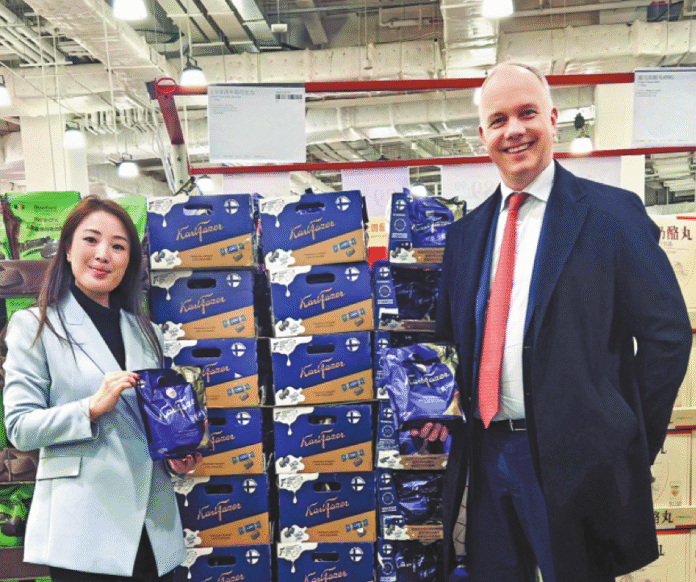
“Our best-selling product, Karl Fazer milk chocolate, has already proven popular among Chinese consumers. We are delighted to see that Karl Fazer dark chocolate is also winning hearts, and that our products are especially appreciated as gifts in China due to their premium quality,” said Christoph Vitzthum, president and CEO of Fazer Group.

Fazer is also strengthening its presence in China in oats and other grain-based products. The current offering features a selection of high-quality, modern oat-based foods designed to meet the needs of today’s consumers. Fazer’s grain-based innovations are sold under Willja brand, and they include oat drinks, oat rice and functional beverages, many developed specifically for Chinese consumers.

Nordic oats, known for their pure taste and strong nutritional profile, provide convenient breakfast, snack or meal for anyone seeking a balanced and healthy lifestyle.

The exceptional quality of these products is rooted in the Nordic climate itself: clean soil, cool air and long summer days create optimal conditions for cultivating nutritious and flavorful oats. These same conditions underpin Fazer’s strong position in the grain milling markets, where the company also supplies high-quality ingredients and solutions to industry customers.

New online flagship store

Fazer is preparing for a milestone event as it is to launch its first store across major Chinese e-commerce platforms in April.

“Opening our own flagship store allows consumers in China to access our products easily. We work closely with Chinese partners across e-commerce and truly value these relationships,” Vitzthum said.

The company’s newly established legal entity in Shanghai strengthens its local presence by enabling smoother import processes, greater operational flexibility and faster adaptation to market needs.

“With a local organization, data-driven insights and a focused portfolio, our goal is to bring innovative and on-trend food products to China and meet consumer expectations as precisely as possible,” said Ouyang Jiaqian, director of Asia Business Development and general manager of Fazer China.

Article inline ad

Unitree Robotics Appointed 2026 Spring Festival Gala Partner

0

By Chen Ye | chinadaily.com.cn | Updated: 2026-01-29

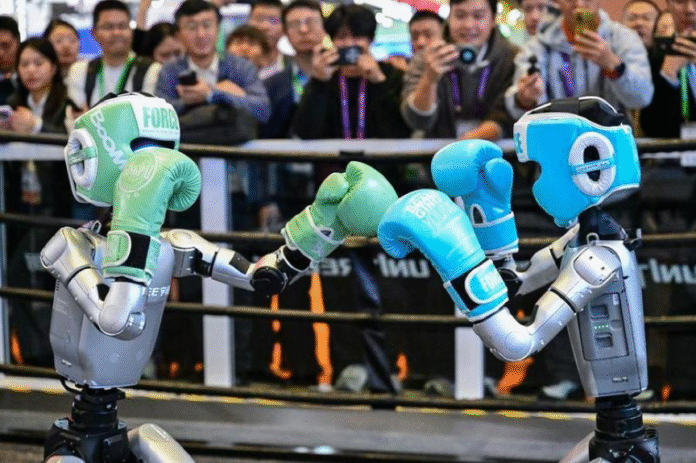
Unitree Robotics has been appointed a robot partner for China’s 2026 CCTV Spring Festival Gala, marking its third appearance on the show. The robots’ playful dance performance last year drew widespread public attention to humanoid robots.

Unitree enjoyed a breakthrough year in 2025. The company led global humanoid robot sales and won multiple medals at the world’s first humanoid athletics event. Its founder, Wang Xingxing, spoke at the national entrepreneurs’ forum.

Wang believes that, although the robot industry is still in its infancy, it will see its ecosystem improve gradually as more real-world applications emerge and more developers get involved, much like personal computers and smartphones in the past. In the meantime, universities and firms have already started purchasing Unitree’s G1 robot.

Wang estimates that almost all related enterprises saw drastic growth in 2025, reflected in surging A-share robotics stocks.

He has reason to sound confident. China is already seeing a boom in its embodied intelligence supply chain, and some have come to view robotics as the “jewel in manufacturing’s crown”. “Thanks to China’s solid industrial strength and foundational capabilities, its robot industry has built a complete, self-sufficient supply chain with global competitive edges,” said Lei Li’nan of Zhejiang University.

The industry is now shifting focus from performance to practical labor, concentrating on developing smarter AI “brains” and dexterous robotic “hands”. Unitree’s Dex5 robotic hand is able to make complex manipulations like handling cards or solving a Rubik’s Cube. The overarching goal is to create robots that boost productivity and can be seamlessly integrated into household and industrial settings.

Wang predicts that within five years, robots will be able to handle tasks in most unfamiliar scenarios efficiently.

Article inline ad

China To Deepen Capital Account Opening

0

By Zhou Lanxu | China Daily | Updated: 2026-01-30

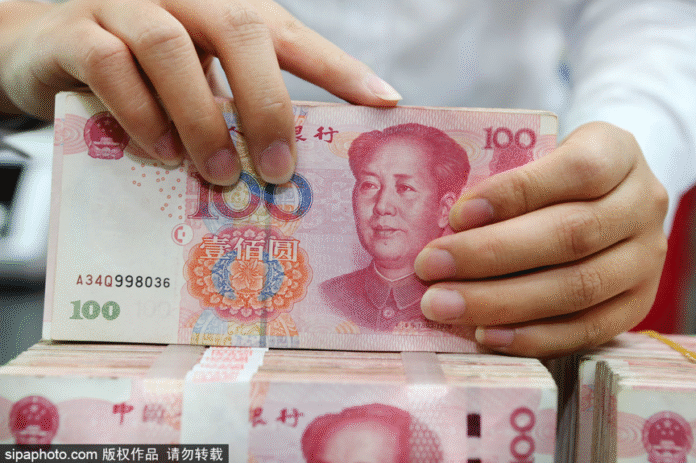
China will deepen high-quality capital account opening and improve the diversified investment and use of the country’s foreign exchange reserves in the coming five years, as part of broader efforts to sharpen its financial strength, a senior official said.

Zhu Hexin, head of the State Administration of Foreign Exchange, has shed light in an article published by Qizhi magazine on key priorities for foreign exchange reform and opening-up in the 15th Five-Year Plan (2026-30) period as the country is entering a “crucial phase of upgrading” in its drive to become a financial powerhouse.

“We will continue to make efforts in key tasks such as deepening facilitation-oriented reforms, promoting capital account opening, and strengthening monitoring of cross-border fund flows, as part of the stepped-up efforts to build the country into a financial powerhouse,” said Zhu, who is also deputy governor of the People’s Bank of China, the country’s central bank.

Zhu said that efforts will be made to coordinate the advance of renminbi internationalization with high-quality opening of the capital account — which tracks cross-border capital flows — as the country steadily pushes forward institutional opening-up in the foreign exchange sector.

Reforms will focus on key areas, including direct investment, cross-border financing and securities investment, with the aim of expanding an autonomous opening-up framework, Zhu said, noting the importance of optimizing foreign exchange management policies for high-level opening platforms such as pilot free trade zones and free trade ports.

Adopted at the fourth plenary session of the 20th Central Committee of the Communist Party of China, the recommendations for formulating the 15th Five-Year Plan have called for advancing the Chinese currency’s internationalization, pursuing greater openness of the capital account, and building a homegrown, risk-controllable cross-border renminbi payment system.

Guan Tao, global chief economist at BOCI China, said that capital account opening and renminbi internationalization have increasingly become “two sides of the same coin”, making the steady improvement of capital account convertibility a key task during the 15th Five-Year Plan period.

“Future steps are likely to remain prudent and gradual,” Guan said, noting that premature liberalization without sufficient domestic reforms could amplify asset price volatility and market distortions.

Meanwhile, Zhu said that China will refine foreign exchange reserve management to ensure asset safety, liquidity and value preservation and appreciation.

The country will leverage equity investment platforms such as the Silk Road Fund and Siyuan Investment Co Ltd to support both major flagship projects and “small yet impactful” people-centered initiatives, serving high-quality Belt and Road cooperation, Zhu said.

Liu Chunsheng, an associate professor of international economics at the Central University of Finance and Economics, said China’s more active use of reserves through market-oriented equity investment platforms can help balance commercial sustainability with strategic objectives.

Article inline ad

High-profile visits signal pivot by EU

0

Leaders’ engagement with China seen as ‘indispensable’ for economic growth

By Wang Keju | China Daily | Updated: 2026-01-30

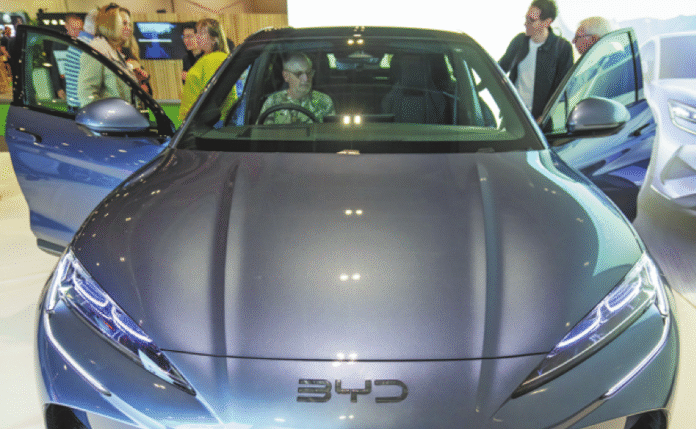
A BYD car on show at an auto expo in London. XINHUA

China has seen a wave of high-profile visits by European leaders lately, signaling a pragmatic pivot by the bloc toward closer economic engagement with Beijing as a counterweight to rising global instability, analysts said.

Hot on the heels of Finnish Prime Minister Petteri Orpo’s visit earlier this week, accompanied by a business delegation of more than 20 companies spanning machinery, forestry, clean energy, and food, British Prime Minister Keir Starmer began his four-day visit on Wednesday, heading an even larger trade mission of over 50 enterprises.

This follows French President Emmanuel Macron’s visit in early December with a business delegation, as well as King Felipe VI in November, the first visit by a Spanish monarch to China in 18 years.

“The sheer frequency and commercial focus of these visits reveal a pragmatic recalibration within European capitals,” said Chen Fengying, a researcher at the Beijing-based China Institutes of Contemporary International Relations.

“There is a palpable recognition that engagement with China remains indispensable for economic growth, despite persistent geopolitical headwinds,” Chen said.

In recent years, Europe’s approach to China has been defined by a deepening contradiction: an economic interdependence coupled with growing strategic unease, resulting in a fractured and often inconsistent policy.

On the one hand, the European Union continues to benefit from access to China’s vast consumer market and resilient supply chains, said Gao Lingyun, a researcher at the Chinese Academy of Social Science’s Institute of World Economics and Politics.

On the other, Gao noted that influenced by Washington’s strategic pressure and its own values-driven concerns, Brussels has increasingly labeled Beijing as a “systemic rival”, seeking to curb China’s technological rise and limit economic dependencies in certain sectors.

Despite persistent trade frictions, China and the European Union have solidified their standing as each other’s second-largest trading partners last year, with bilateral trade reaching 5.93 trillion yuan ($853.6 billion), a 6 percent increase, according to data released by the General Administration of Customs.

“Over a quarter of all goods traded between China and the EU now fall within the high-tech product category,” said Lyu Daliang, director of the administration’s department of statistics and analysis.

Earlier this month, Beijing and Brussels, after more than a year of talks, agreed to set minimum prices for imported Chinese electric vehicles in lieu of hefty tariffs.

Commerce Minister Wang Wentao has expressed hope that the Finnish government could play an active role in helping and encouraging the EU to exercise prudence in using trade and economic restrictive tools, during a meeting with Finnish Prime Minister Petteri Orpo earlier this week.

Orpo also stressed that Finland supports free trade and fair competition and looks forward to greater mutual trust and reduced trade barriers between Europe and China.

Driven by deep economic integration and complementary market needs, this reality makes managing friction while deepening collaboration not just an option but a necessity for both sides, senior executives said.

Article inline ad

New survey highlights divergence of market expectations

0

By Li Jing | chinadaily.com.cn | Updated: 2026-01-29

Investor sentiment toward China’s capital markets remained broadly resilient toward the end of 2025, characterized by a clear divergence between rising optimism among retail investors and a shift toward prudence among financial professionals, according to a survey by the Cheung Kong Graduate School of Business.

The latest investor sentiment survey released on Wednesday found that 62.3 percent of respondents expected China’s A-share market to rise, largely unchanged from the previous quarter. However, beneath the headline figure, views diverged, reflecting different assessments of valuation, risk, and market sustainability.

Retail investors became more upbeat, with 64.2 percent expecting gains, while confidence among financial-sector respondents adjusted to 59.8 percent, highlighting a more cautious stance among professional investors.

“The overall mood is stable, but the drivers of confidence are evolving,” said Liu Jing, professor of accounting and finance at CKGSB, who led the survey. “Retail investors tend to respond more to market momentum, while professionals are more keenly focused on valuation metrics and the sustainability of returns.”

The quarterly survey, conducted in December among around 1,300 investors and 800 financial professionals, broadly mirrors market performance over the past year. After solid gains in the first three quarters of 2025, China’s stock markets entered a period of consolidation.

CKGSB’s analysis suggests that this caution is closely linked to valuation dynamics. The report estimates that overall A-share market valuation rose more than 20 percent in 2025, while corporate earnings growth remained broadly flat, indicating that the rally was driven largely by valuation expansion rather than a broad-based improvement in fundamentals.

“After a valuation-led rally, it is natural for professional investors to reassess return expectations,” Liu noted. “This reflects healthy prudence, rather than a loss of confidence.”

Article inline ad

New survey highlights divergence of market expectations

0

China has seen a wave of high-profile visits by European leaders lately, signaling a pragmatic pivot by the bloc toward closer economic engagement with Beijing as a counterweight to rising global instability, analysts said.

Hot on the heels of Finnish Prime Minister Petteri Orpo’s visit earlier this week, accompanied by a business delegation of more than 20 companies spanning machinery, forestry, clean energy, and food, British Prime Minister Keir Starmer began his four-day visit on Wednesday, heading an even larger trade mission of over 50 enterprises.

This follows French President Emmanuel Macron’s visit in early December with a business delegation, as well as King Felipe VI in November, the first visit by a Spanish monarch to China in 18 years.

“The sheer frequency and commercial focus of these visits reveal a pragmatic recalibration within European capitals,” said Chen Fengying, a researcher at the Beijing-based China Institutes of Contemporary International Relations.

“There is a palpable recognition that engagement with China remains indispensable for economic growth, despite persistent geopolitical headwinds,” Chen said.

In recent years, Europe’s approach to China has been defined by a deepening contradiction: an economic interdependence coupled with growing strategic unease, resulting in a fractured and often inconsistent policy.

On the one hand, the European Union continues to benefit from access to China’s vast consumer market and resilient supply chains, said Gao Lingyun, a researcher at the Chinese Academy of Social Science’s Institute of World Economics and Politics.

On the other, Gao noted that influenced by Washington’s strategic pressure and its own values-driven concerns, Brussels has increasingly labeled Beijing as a “systemic rival”, seeking to curb China’s technological rise and limit economic dependencies in certain sectors.

Despite persistent trade frictions, China and the European Union have solidified their standing as each other’s second-largest trading partners last year, with bilateral trade reaching 5.93 trillion yuan ($853.6 billion), a 6 percent increase, according to data released by the General Administration of Customs.

“Over a quarter of all goods traded between China and the EU now fall within the high-tech product category,” said Lyu Daliang, director of the administration’s department of statistics and analysis.

Earlier this month, Beijing and Brussels, after more than a year of talks, agreed to set minimum prices for imported Chinese electric vehicles in lieu of hefty tariffs.

Commerce Minister Wang Wentao has expressed hope that the Finnish government could play an active role in helping and encouraging the EU to exercise prudence in using trade and economic restrictive tools, during a meeting with Finnish Prime Minister Petteri Orpo earlier this week.

Orpo also stressed that Finland supports free trade and fair competition and looks forward to greater mutual trust and reduced trade barriers between Europe and China.

Driven by deep economic integration and complementary market needs, this reality makes managing friction while deepening collaboration not just an option but a necessity for both sides, senior executives said.


Article inline ad

China’s 5G Base Stations Top 4.83 Million By End Of 2025

0

Xinhua | Updated: 2026-01-28

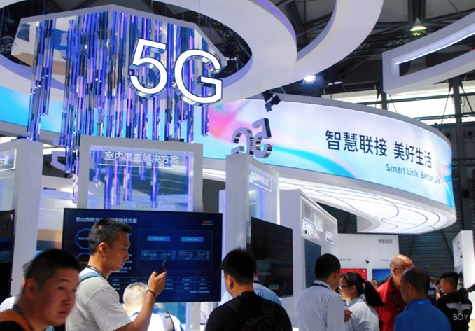
BEIJING — China’s telecommunications sector maintained steady growth in 2025, with the country surpassing its development goals for 5G and gigabit optical network infrastructure set out in the 14th Five-Year Plan period (2021-25), official data showed Wednesday.

 By the end of 2025, the number of 5G base stations in China reached 4.838 million, according to the Ministry of Industry and Information Technology. This translates to 34.4 5G base stations per 10,000 people, exceeding the national planning target by 8.4 units.

 The sector’s total business volume, calculated at the previous year’s prices, rose 9.1 percent year on year. Telecom business revenue totaled 1.75 trillion yuan (about $250.8 billion), up 0.7 percent.

 Notably, emerging businesses such as cloud computing, big data, the Internet of Things (IoT), and data centers accounted for 25.7 percent of the total revenue.

 In the realm of technological innovation, China’s declarations of 5G standard-essential patents accounted for 42 percent of the global total. The country also achieved significant progress in verifying 6G system architecture and other key technologies.

 In terms of infrastructure, China has achieved gigabit optical network access in every county, as well as 5G coverage in all towns and more than 95 percent of administrative villages.

 By the end of 2025, 5G-A (5G-Advanced) service coverage extended to more than 330 cities. The total length of the national optical fiber cable network reached 74.99 million km, while the number of data center racks provided by the three major telecom operators reached 938,000.

 The user base continued to expand, with mobile phone subscriptions reaching 1.827 billion by the end of 2025, including 1.204 billion 5G subscriptions. Mobile IoT terminal users increased by 8.7 percent to 2.888 billion, with particularly strong growth in the Internet of Vehicles and public service sectors.

 The ministry also highlighted the deepening integration of digital technology with the real economy. 5G and gigabit optical networks have been applied across 91 major categories of the national economy. The industrial internet now covers all 41 industrial categories.

Article inline ad

Gold Extends Record Advance On Safe-Haven Bets

0

By WANG ZHUOQIONG | CHINA DAILY | Updated: 2026-01-29

On Wednesday, spot gold surged past $5,280 per ounce, continuing to break historical records, with year-to-date rises exceeding 20 percent.

 Spot silver also reached a peak of $116 per ounce before settling to trade around $115.3.

 Goldman Sachs, in its latest report, raised its year-end gold price forecast from $4,900 to $5,400 per ounce, driven by strengthening demand from both private investors and central banks.

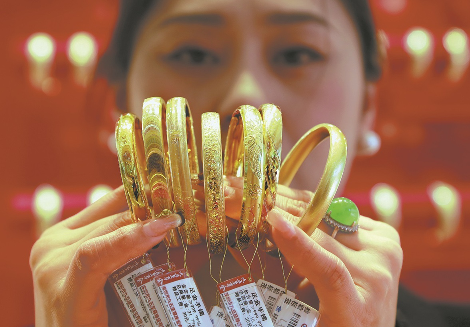
 This rally has swiftly translated into higher retail costs for gold jewelry across China. Major domestic jewelry brands, including Chow Tai Fook, Lao Feng Xiang, Chow Sang Sang, and Laomiao Gold, adjusted their prices upward on Wednesday, with pure gold jewelry now quoted between 1,612 yuan ($232.03) and 1,620 yuan per gram.

 Wang Xiaoli, a salesperson at a Lukfook Jewellery store in Beijing, said that she frequently receives inquiries from customers about the store’s gold offerings. “The price of gold has risen by almost 200 yuan per gram in just a week,” she said.” Many customers are buying pure gold jewelry and bullion bars, seeing them as investment opportunities.”

 Amid this gold price surge, a new wave of retail investors is also entering the market, seeking to capitalize on the precious metal’s rising value and as a safe haven amid mounting global uncertainties. The escalating geopolitical risks — from US-European tensions over Greenland to ongoing instability in Ukraine, Venezuela, and the Middle East — are prompting investors to seek shelter in the precious metal.

 Beijing-based resident Wang Lin is among those who have recently discovered the investment potential of gold.

 “I started buying gold in April 2025, after seeing bloggers on Red-Note discussing the investment opportunities,” Wang said, reflecting on what she called her “gold awakening.”

 “I bought 80 grams of gold at a Postal Savings Bank unit near my workplace,” she said, adding that she has since earned about 23,000 yuan in returns. Wang, whose investment logic is simple and grounded, added that, “Buying gold is like saving. Even if I bought at a high price, it still feels safer than investing in stocks.”

 Li Yuefeng, a researcher at the Beijing Gold Economy Development Research Center, said: “Concerns over potential trade wars, along with the US leadership’s recent comments about allowing the greenback to decline, have fueled fears of a competitive currency devaluation. As a result, gold prices have surged.”

 Li believes gold prices could test the range of 5,300–5,700 yuan per gram in the short term, with a potential peak around 5,500 yuan. However, after this rally, a corrective phase is likely, he added.

Article inline ad