Wednesday, November 25, 2026

Home Blog Page 85

Central Soes Key Engines Of ‘AI Plus’ Industrial Push

0

By Zhong Nan | chinadaily.com.cn | Updated: 2026-01-29

China will push its centrally administered State-owned enterprises to advance the “AI Plus” initiative, positioning the entities as major drivers of artificial intelligence-enabled applications across industries and key organizers of a more coherent industrial layout, a senior State assets regulator said on Wednesday.

 Speaking at a news conference in Beijing, Pang Xiaogang, vice-chairman of the State-owned Assets Supervision and Administration Commission of the State Council, said the move will strengthen investment-led development by formulating a dedicated AI strategy for the 15th Five-Year Plan (2026-30) period.

 Pang said the efforts will focus on accelerating the construction and efficient, intensive use of information and communication networks, the nationwide integrated computing power network and domestically developed intelligent computing clusters, so that effective investment can better support high-quality industrial growth.

 As AI is a major driving force behind the new round of technological revolution and industrial transformation, the commission convened dedicated meetings for two consecutive years to fully advance the “AI Plus” initiative among central SOEs, achieving a series of positive results in key areas such as applications, computing power, data and models.

 According to SASAC, central SOEs have focused on priority sectors, including energy, manufacturing and telecommunications, to develop more than 1,000 application scenarios.

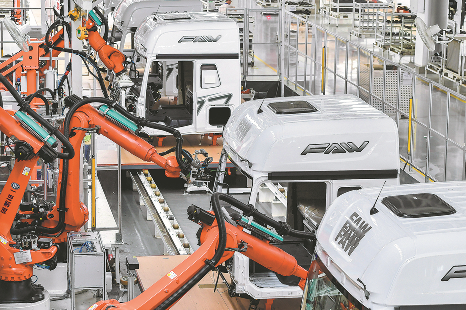
 For example, China Southern Power Grid has used AI to enable intelligent power transition and fault prediction, while central SOEs from the automotive sector are piloting the use of intelligent robots on factory floors.

 CRRC Corp, China’s largest rolling stock manufacturer by production volume, has produced industry-specific models to push smarter development of rail transit equipment, making AI an important driver of the transformation and upgrade of traditional industries.

 Pang said that in the next phase, central SOEs will be encouraged to deepen scenario-based innovation, with a focus on priority areas such as embodied intelligence, including humanoid and industrial robots, as well as energy and power.

 “The government will support central SOEs to establish ‘AI Plus’ industrial communities, broaden access to application scenarios, and develop flagship projects, sector-wide use cases and high-value pilot applications,” he added.

 In 2025, China’s central SOEs reported total assets exceeding 95 trillion yuan ($13.68 trillion) and combined profits of 2.5 trillion yuan. They also invested 1.1 trillion yuan in research and development, marking the fourth consecutive year that spending in this category topped 1 trillion yuan, data from the SASAC showed.

 Chen Wenjian, chairman of China Railway Group, a Beijing-headquartered railway and infrastructure project contractor, said the group will sharpen its focus on integrating technological and industrial innovation to strengthen core competitiveness during the 15th Five-Year Plan period.

 “We will focus on upgrading traditional sectors rather than simply expanding capacity,” said Chen.

 “In the construction business, this means accelerating a shift toward smarter, greener and more integrated models, with AI deployed to deliver practical, scenario-based applications across our projects.”

 State Grid Corporation of China also plans to invest up to 4 trillion yuan in fixed assets between 2026 and 2030, a 40 percent increase from the previous five-year plan.

 The power utility group said that part of the investment will be allocated to enhancing digital and AI infrastructure to underpin long-term growth

Article inline ad

Green, High-Tech Sectors Focus Of Increasing ODI

0

By Wang Keju | chinadaily.com.cn | Updated: 2026-01-29

Chinese companies are expanding overseas investment in high-tech and green sectors, with outbound direct investment rising and new policy support emerging, even as global narratives of economic “decoupling” persist, officials and experts said.

 This trend is emerging as a key channel for cross-border collaboration, supporting innovation and shared prosperity, they added.

 “China’s cumulative outbound direct investment has ranked among the world’s top three for nine consecutive years,” said He Yongqian, spokeswoman for the Ministry of Commerce.

 Chinese companies have established more than 50,000 overseas enterprises across 190 countries and regions as of the end of last year, He told a news conference earlier this month, adding that the country’s outbound direct investment reached $174.38 billion in 2025, up 7.1 percent from a year earlier.

 For the world’s second-largest economy, “the rational and orderly cross-border allocation of industrial and supply chains” has become a long-term strategy. It has been included in the recommendations for formulating the country’s 15th Five-Year Plan (2026-30).

 Earlier this week, Wang Ya, who heads the foreign investment management department of the Commerce Ministry, said the country will establish a “national-level integrated service platform” for businesses seeking overseas operations.

 By integrating resources from legal, taxation, finance, logistics, customs, trade promotion and other sectors, it will address common needs such as policy consultation, country-specific information, resource matchmaking, and risk prevention and control for businesses expanding overseas, Wang added.

 As the global economy navigates a period of profound uncertainties, experts said China’s commitment to opening-up is pivoting from a traditional focus on attracting foreign capital to a more balanced strategy that equally prioritizes inbound and outbound investment.

 Many Chinese enterprises are investing overseas, especially in developing regions across Southeast Asia, Africa and Latin America, said Zhang Xiangchen, deputy director-general of the World Trade Organization, calling it an “irreversible and unstoppable” trend.

 “In the long run, the scale of China’s outbound direct investment is certain to exceed the amount of foreign capital it attracts,” Zhang said.

 He noted that many countries are still in the early stages of industrialization, while China is overall in an advanced phase, with certain sectors in the mid-industrial phase. “This gap represents a point of connection,” Zhang added.

 It’s also worth noting that the structure of China’s overseas investment is gradually transitioning from traditional manufacturing toward higher-value-added fields, such as high technology and low energy consumption, according to a September report by global auditing advisory firm KPMG.

 In particular, investments in areas such as the digital economy and green energy are gradually becoming new growth drivers, the report said.

 Li Lecheng, minister of industry and information technology, said in December that China will “encourage competitive Chinese enterprises in photovoltaics, wind power, lithium batteries and new energy vehicles to expand globally and to invest in and develop green energy projects in countries and regions involved in the Belt and Road Initiative and beyond”.

 Lisa Li, head of Global China Practice at KPMG China, said that in recent years, digital infrastructure, new energy vehicles, photovoltaics and related sectors have emerged as trailblazers, showcasing China’s progress in these fields.

 These industries have not only broken through bottlenecks in exporting technical standards, but have also reshaped the global perception of “Made in China” through comprehensive industrial chain integration. This has injected fresh vitality into the stability of global supply chains, she added.

 Chinese automaker BYD now operates production bases in countries such as Uzbekistan, Thailand and Brazil, and is building new facilities in Hungary and Turkiye.

 The global footprint of companies like BYD is a microcosm of a larger strategic pivot for the entire Chinese new energy vehicle sector.

 According to a report from US research institution Rhodium Group, China’s NEV industry saw overseas investment reach $16 billion in 2024, surpassing domestic investment of $15 billion for the first time.

 “China’s outbound investment is undergoing a qualitative upgrade,” said Zhou Mi, a senior researcher at the Chinese Academy of International Trade and Economic Cooperation. “The focus is changing from one of volume and scale to one of value and partnership.

 “This tech-focused expansion, based on mutual benefit, can act as a stabilizing force for the global economy amid rising protectionism,” Zhou added

Article inline ad

Wind And Solar Lead China’s Energy Transformation, Surpassing Coal

0

By Zheng Xin | chinadaily.com.cn | Updated: 2026-01-28

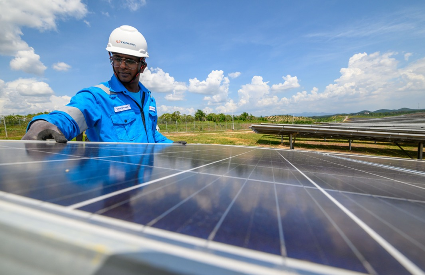
China’s grid-connected wind and solar capacity reached 1.84 billion kilowatts (kW) in 2025, surpassing coal power for the first time in history, according to data from the National Energy Administration (NEA).

 The data shows that wind and solar energy now make up 47.3 percent of the nation’s total power mix, exceeding thermal power by 300 million kW.

 Solar power led the surge with a 35.4 percent year-on-year increase, reaching 1.2 billion kW, while wind power grew by 22.9 percent to reach 640 million kW, it said.

 Overall, China’s total power generation capacity rose to 3.89 billion kW, a 16.1 percent jump from the previous year.

 Annual renewable additions have accelerated sharply, rising from 120 million kW in 2022 to a record 430 million kW in 2025. This steady climb highlights China’s rapid transformation of its energy grid to meet long-term carbon targets, it said.


Article inline ad

Real Estate Loans Fall For Third Consecutive Year, New Data Shows

0

By Zhou Lanxu | chinadaily.com.cn | Updated: 2026-01-28

Renminbi loans to real estate related activity declined for the third consecutive year in 2025, official data showed on Tuesday, reflecting the continued adjustment in China’s property market.

 In its fourth-quarter report on the distribution of financial institutions’ lending, the People’s Bank of China said that outstanding renminbi loans to real estate related activity stood at 51.95 trillion yuan ($7.48 trillion) at the end of last year.

 The figure fell by 963.6 billion yuan in 2025, or 1.6 percent year-on-year, marking the third annual decline in a row. The 1.6 percent decline was the sharpest on record, according to Wind Info.

 More detailed data showed that outstanding personal housing loans fell 1.8 percent, or 676.8 billion yuan, year-on-year by the end of last year, also posting a third consecutive annual drop.

 Outstanding loans for real estate development declined 357.5 billion yuan, or 3 percent, year-on-year, versus a rise of 3.2 percent in 2024, the central bank said.

Article inline ad

Chinese Electric Two-Wheeled Vehicle Maker Eyes Global Expansion

0

By Li Jiaying | chinadaily.com.cn | Updated: 2026-01-28

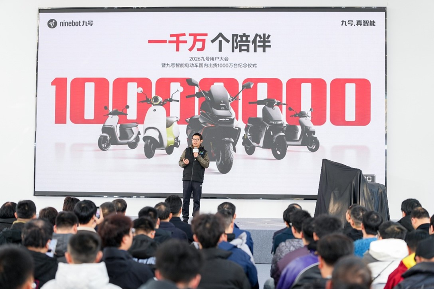
Segway-Ninebot, a Chinese maker of smart electric two-wheeled vehicles, said its cumulative global shipments of smart electric scooters and motorcycles have exceeded 10 million units, marking a new milestone for the company’s mobility business.

 Speaking at the company’s 2026 user conference, the company’s founder and CEO Wang Ye announced a strategic upgrade centered on a dual-brand global expansion and the transition from internal combustion engines to intelligent electric powertrains.

 Under the plan, Ninebot will operate its smart electric two-wheeler business through two brands — Ninebot and Segway — to target different user segments in global markets.

 Domestically, the company has begun operating its two brands independently, but in coordination with each other. Ninebot focuses on everyday convenience and safety for mass-market users, while Segway emphasizes performance-oriented riding and exploration.

 Looking overseas, Ninebot said electric two-wheelers remain at an early stage of adoption in many regions — including Southeast Asia, Europe, and Latin America — presenting opportunities, however, challenges loom, as well, such as range anxiety, charging infrastructure, and riding safety.

 “We chose to go global and to let intelligent electric mobility surpass fuel-powered vehicles not because it is easy, but because it is difficult and the right thing to do,” Wang said. “We believe a quieter, cleaner, smarter, and safer riding experience should not require an exhaust pipe.”

Article inline ad

CNRC Submits Proposal To Address Hurdles Of Pirelli’s US Expansion

0

By Zhong Nan | chinadaily.com.cn | Updated: 2026-01-28

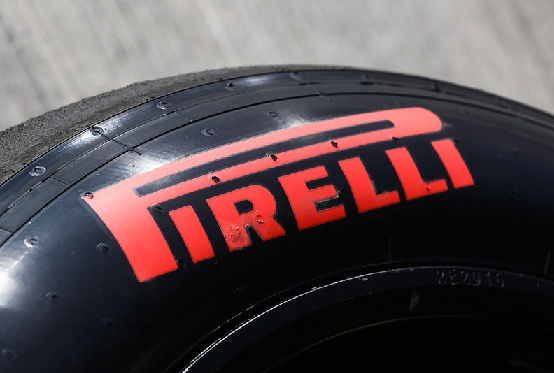
China National Tire and Rubber Co Ltd, or CNRC, the controlling shareholder of Italian tire maker Pirelli, has submitted a proposal to address governance arrangements and potential regulatory concerns in the United States.

 The move follows an announcement last week by Camfin, Pirelli’s second-largest shareholder, that it would not renew its shareholder agreement with China’s Sinochem Holdings Corp, the parent group of CNRC.

 Milan-based Camfin said Pirelli’s expansion in the US faces additional hurdles due to its main shareholder being a Chinese entity, as the US government steps up restrictions on Chinese automotive technology.

 In response to this move, CNRC said it has submitted a structured, well-founded proposal based on standard and widely used corporate tools in line with the best international practices, with the objective of addressing both Pirelli’s governance framework and the concerns related to US regulatory requirements, if any.

 According to a CNRC statement released on Monday, the Chinese company hopes its proposal can be neutrally assessed with genuine cooperative spirit and it will support any institutional, transparent, and fact-based assessment process.

 CNRC reiterated its full willingness to engage in good-faith discussions with relevant parties to identify market-consistent and sustainable solutions that are in the best interest of Pirelli, its shareholders, its employees, and its long-term industrial development in every international market.

Article inline ad

China’s Tech Smes Receive More Credit Support In 2025

0

Xinhua | Updated: 2026-01-28

BEIJING – China’s tech-oriented small and medium-sized enterprises (SMEs) saw improved access to credit by the end of 2025, central bank data showed on Tuesday.

 By the conclusion of last year, a total of 275,000 tech-oriented SMEs had received loan support, with the loan access rate reaching 50.2 percent, up 2 percentage points from a year earlier, according to data released by the People’s Bank of China.

 Outstanding loans in both yuan and foreign currencies to tech SMEs stood at 3.63 trillion yuan ($519.63 billion) at the end of 2025, an increase of 19.8 percent year-on-year, and 13.6 percentage points faster than overall loan growth, the data revealed.

 The data also showed that there was strengthened credit support for high-tech companies in 2025, with outstanding loans to high-tech firms in both yuan and foreign currencies rising 7.5 percent year-on-year to 18.61 trillion yuan, 1.3 percentage points higher than the overall loan growth rate.

 Inclusive loans to small and micro firms grew rapidly last year, seeing outstanding inclusive small and micro loans in yuan terms standing at 36.57 trillion yuan, up 11.1 percent year-on-year.

 Green loans in both yuan and foreign currencies increased by 7.72 trillion yuan in 2025, while outstanding agriculture-related loans grew 6.5 percent year-on-year to 53.57 trillion yuan by the end of 2025, the data revealed.

Article inline ad

Vanke Secures 2.36b Yuan Loan Support From Shenzhen Metro

0

By Wang Keju | chinadaily.com.cn | Updated: 2026-01-28

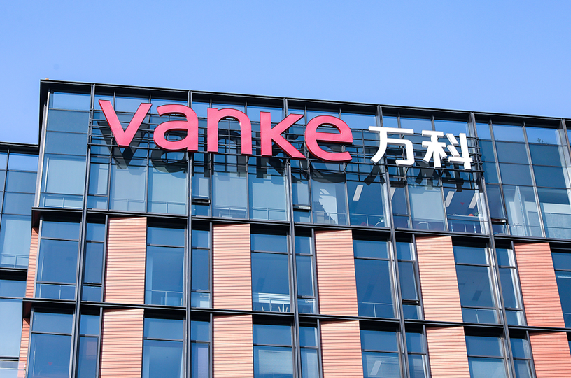
China Vanke Co Ltd, one of the country’s largest property developers, announced on Tuesday night that it had secured fresh credit support from its largest shareholder, Shenzhen Metro, with a loan facility worth up to 2.36 billion yuan ($333 million), extended to the company.

 On the same day, the extension proposals for its medium-term notes “22 Vanke MTN004” and “22 Vanke MTN005” were approved, Vanke said in a notice.

 As part of the agreement, Vanke is required to immediately repay 40 percent of the principal and interest due on these notes, amounting to about 2.461 billion yuan, nearly matching the value of this latest loan provided by Shenzhen Metro.

 The loan has a term of 36 months and carries an interest rate of 2.34 percent. Shenzhen Metro also reserves the right to require Vanke to provide collateral for this loan.

 “The interest rate on this shareholder loan follows market-based principles and is in line with the rates Vanke currently obtains from financial institutions. This arrangement fully demonstrates the strong support of our major shareholder,” Vanke added

Article inline ad

China’s Central Soes Keep R&D Spending Above 1 Trillion Yuan For 4 Straight Years

0

Xinhua | Updated: 2026-01-28

BEIJING — China’s State-owned enterprises (SOEs) directly administered by the central government invested 1.1 trillion yuan (about $157.69 billion) in research and development (R&D) in 2025, official data showed on Wednesday.

 The R&D spending has remained above 1 trillion yuan for four consecutive years, said Pang Xiaogang, deputy head of the State-owned Assets Supervision and Administration Commission of the State Council.

 China’s central SOEs have played an important role in advancing key technologies, fostering strategic emerging industries, and developing new quality productive forces.

 In 2025, central SOEs invested 2.5 trillion yuan in strategic emerging industries, accounting for 41.8 percent of their total investment. Their investment and development have boosted the growth across upstream and downstream enterprises along industrial chains, providing strong support for China’s economic and social development.

 The data also showed that central SOEs posted a combined total profit of 2.5 trillion yuan in 2025. By the end of last year, their total assets had exceeded 95 trillion yuan

Article inline ad

Report: Overseas Expansion A Growth Necessity

0

By WANG YING in Shanghai | China Daily | Updated: 2026-01-28

Going global is no longer an option for Chinese enterprises but has become a necessity for their growth and development, according to a recent report. Industry experts believe that global expansion will be one of the most important investment themes for Chinese companies over the coming decade.

 Amid adjustments in the global economic landscape, overseas expansion is no longer a strategic choice but a compulsory task for the survival and long-term development of Chinese companies, according to a report titled China’s Global Reach: Green Real Estate Leads Manufacturing Overseas Surge, published on Jan 15 by London-based global real estate consultancy Knight Frank.

 Overseas revenue of Chinese listed companies exceeded 10 trillion yuan ($1.44 trillion) for the first time in 2024, accounting for 13.8 percent of their total revenue, according to the report. In contrast, domestic revenue recorded its first decline in a decade.

 Yang Yuechen, Knight Frank’s head of research and consultancy in Shanghai and Beijing, said that from a macro perspective, industrial upgrading and policy guidance have driven a new wave of overseas expansion.

 “High-tech industries, green energy, and the digital economy have emerged as major investment highlights, with Chinese enterprises steadily moving up the global value chain,” Yang explained.

 Data from the report indicate that China’s outbound direct investment continued to grow. In the first three quarters of 2025, total outbound direct investment across all industries reached $128.93 billion, up 3.6 percent year-on-year. Among them, non-financial outbound direct investment totaled $110.74 billion, accounting for more than 85 percent of the total, highlighting the dominant role of the real economy. By the end of June 2025, China’s total outbound direct investment had reached $3.35 trillion, it added.

 Such insights are echoed by UBS Securities, which suggested that overseas expansion by Chinese enterprises will be one of the most important investment themes over the next five to 10 years.

 Xu Bin, head of research at UBS Securities, took the proportion of offshore revenue among A-share listed companies as an example, noting that overseas revenue accounted for only 3 to 4 percent of total revenue two decades ago, rose to 15 percent in 2024, and continued to increase in the first half of 2025.

 “This trend will continue over the next five to 10 years and beyond, with the proportion of overseas revenue for Chinese enterprises steadily rising,” Xu said.

 Rising overseas revenue not only reflects faster profit growth, but also indicates an improvement in earnings quality, added Xu.

 Industry analysts generally classify overseas expansion into two main approaches: traditional exports, in which products manufactured domestically are shipped directly overseas, and overseas capacity building, where companies establish production facilities abroad.

 Xu said that in the first 11 months of 2025, China’s exports grew 5 percent year-on-year in US dollar terms. While exports to the United States fell 19 percent, this decline was offset by growth in exports to ASEAN, Africa, and other markets, reflecting the increasing diversification of China’s export destinations.”For exports, we expect year-on-year growth of 2.5 percent in 2026 and 5.5 percent in 2027,” Xu said.

 Zhang Xiao, executive director of foreign direct investment advisory with United Overseas Bank (China)Ltd, said that Chinese enterprises are adopting increasingly diverse overseas expansion models.

 “Some Chinese companies place their research and development operations overseas to gain early access to talent and technology, while others seek overseas partners or rely on local agents and suppliers to support their international market expansion,” Zhang said.

 According to the Knight Frank report, Chinese companies’ overseas real estate investment is more concentrated in logistics and warehousing facilities, industrial parks, and commercial complexes, closely aligned with their overseas operational needs.

 Yang said that companies are advised to fully assess regional economic trends and policy incentives when expanding overseas, remain flexible in response to market supply and demand changes, and strengthen compliance management and localized operations.

Article inline ad