Wednesday, November 25, 2026

Home Blog Page 86

China, Sri Lanka To Set Up Renminbi Clearing Arrangements

0

By Zhou Lanxu | chinadaily.com.cn | Updated: 2026-01-28

The People’s Bank of China has recently signed a memorandum of cooperation with the Central Bank of Sri Lanka to establish renminbi clearing arrangements in Sri Lanka, said a statement released by China’s central bank on Wednesday.

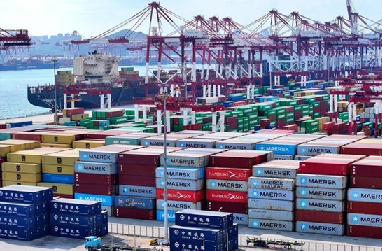
 The establishment of renminbi clearing arrangements will facilitate the use of the Chinese renminbi in cross-border transactions by enterprises and financial institutions from both countries, it said, adding the move will further promote bilateral trade and investment.

Article inline ad

Tax Data Reveals China’s High-Quality Growth Momentum In 2021-2025

0

Xinhua | Updated: 2026-01-28

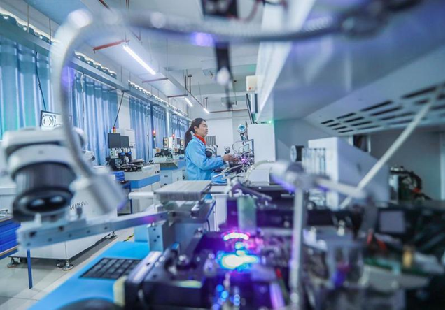
BEIJING – China’s economy accelerated its transition toward innovation-led and green development during the 14th Five-Year Plan period (2021-2025), according to tax invoice data released on Wednesday.

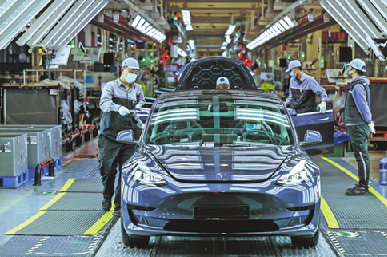
 High-end manufacturing showed robust growth, with sales revenue in the equipment manufacturing sector rising by an average annual rate of 9.1 percent over the past five years, according to data from the State Taxation Administration.

 In 2025, equipment manufacturing accounted for 47.7 percent of total manufacturing sales, up 4.7 percentage points from 2021, driven particularly by double-digit gains in computer communication and instrument manufacturing.

 The five-year period also witnessed a surge in innovation, as sales revenue for high-tech industries grew by an annual average of 13.9 percent. In 2025 alone, the smart consumer device, integrated circuit, and robot manufacturing sectors recorded impressive year-on-year sales growth of 32.4 percent, 19.2 percent, and 24 percent, respectively.

 Digital transformation and the green transition have significantly deepened, with core industries of the digital economy experiencing an average annual sales increase of 10.5 percent over the past five years, according to tax data.

 Meanwhile, sales of the new energy vehicle manufacturing and clean energy generation sectors increased by an average of 49.5 percent and 13.9 percent annually, respectively. In 2025, sales of clean energy generation accounted for 38.5 percent of all electricity production revenue, up 6.9 percentage points from 2021.

Article inline ad

China To Deepen High-Quality Capital Account Opening

0

By Zhou Lanxu | chinadaily.com.cn | Updated: 2026-01-28

China will deepen high-quality capital account opening and improve the diversified investment and use of the country’s foreign exchange reserves in the next five years, as part of broader efforts to sharpen its financial strength, a senior official said.

 In an article published by Qizhi magazine, Zhu Hexin, head of the State Administration of Foreign Exchange, has shed light on key priorities for foreign exchange reform and opening-up in the 15th Five-Year Plan (2026-30) period as the country is entering a “crucial phase of upgrading” in its drive to become a financial powerhouse.

 “We will continue to make efforts in key tasks such as deepening facilitation-oriented reforms, promoting capital account opening, and strengthening monitoring of cross-border fund flows, as part of the stepped-up efforts to build the country into a financial powerhouse,” Zhu, who is also deputy governor of the People’s Bank of China, the country’s central bank, said.

 Zhu said that efforts will be made to coordinate the advancement of renminbi internationalization with high-quality opening of the capital account — which tracks cross-border capital flows — as the country steadily pushes forward institutional opening-up in the foreign exchange sector.

 Reforms will focus on key areas, including direct investment, cross-border financing and securities investment, with the aim of expanding an autonomous opening-up framework, Zhu said, noting the importance of optimizing foreign exchange management policies for high-level opening platforms such as pilot free trade zones and free trade ports.

 Adopted at the fourth plenary session of the 20th Central Committee of the Communist Party of China, the recommendations for formulating the 15th Five-Year Plan have called for advancing the Chinese currency’s internationalization, pursuing greater openness of the capital account, and building a homegrown, risk-controllable cross-border renminbi payment system.

 Guan Tao, global chief economist at BOCI China, said that capital account opening and renminbi internationalization have increasingly become “two sides of the same coin”, making the steady improvement of capital account convertibility a key task during the 15th Five-Year Plan period.

 “Future steps are likely to remain prudent and gradual,” Guan said, noting that premature liberalization without sufficient domestic reforms could amplify asset price volatility and market distortions.

 He added that policy priorities could include streamlining existing cross-border securities investment channels into a more unified framework, strengthening the use of taxation tools to better manage capital flows, and encouraging more overseas institutions to issue bonds and equities in China’s onshore market.

 Meanwhile, Zhu said that China will refine foreign exchange reserve management to ensure asset safety, liquidity and value preservation and appreciation.

 The country will leverage equity investment platforms such as the Silk Road Fund and Siyuan Investment Co Ltd to support both major flagship projects and “small yet impactful” people-centered initiatives, serving high-quality Belt and Road cooperation, Zhu said.

 Liu Chunsheng, an associate professor of international economics at the Central University of Finance and Economics, said China’s more active use of reserves through market-oriented equity investment platforms can help balance commercial sustainability with strategic objectives.

 This would also provide stable, long-term capital for other emerging economies, thus promoting more diversified global capital flows and contributing to a more multipolar international monetary system, Liu said.

 China’s foreign exchange reserves reached a new decade-high of $3.3579 trillion as of the end of 2025, while the country’s official gold reserves have risen for the 14th straight month to 74.15 million ounces, official data showed.

 Zhu added that SAFE will focus on further facilitating cross-border trade, financing and investment to support the real economy, improving a foreign exchange policy framework that grants greater convenience to compliant and credible market participants.

 The dual framework of macroprudential management and micro-level supervision will also be enhanced to ensure foreign exchange market stability, Zhu said, along with an enriched policy toolkit, stronger monitoring and early warning for capital flows, and efforts to keep the renminbi exchange rate basically stable at a reasonable and balanced level.

Article inline ad

Global investors turn increasingly to Hong Kong to monetize rosy growth prospects

0

Xinhua | Updated: 2026-01-28

HONG KONG – China’s Hong Kong has turned heads globally with its initial public offering bonanza expected to steam along in 2026, luring investors who are drooling over Chinese assets bolstered by the country’s growth prospects.

 The Hong Kong bourse raised over HK$280 billion ($35.9 billion) in 2025, making it the world’s largest IPO market. The listing gong for a dozen tech heavyweights rang in a brisk new year with 400 companies waiting in the IPO pipeline.

 The 19th Asian Financial Forum concluding on Tuesday in the city was abuzz with fortune-telling of “the next CATL,” which raised over HK$35 billion last May.

 Results of a joint survey conducted by the Hong Kong Trade Development Council and EY released at the forum showed that 88 percent of business leaders polled cited Hong Kong’s financial market ecosystem, marked by a robust IPO pipeline, as its unique strength.

 Australian private equity fund manager Hussein Rifai has been traveling to Hong Kong for business since the 1980s, offering financial services to Chinese investors and companies. As investor interest heightened for Chinese assets, he is now hobnobbing with mainland and Hong Kong brokers at the forum in search of bigger deals.

 “I believe there is a lot of room for two-way investment between Australia and China, especially in industries like food, mining and artificial intelligence (AI),” he said, adding that Chinese AI models can help make corporate management more efficient in Australia.

 “Hong Kong is where global patient capital converges,” said Wang Shuguang, president of China International Capital Corp Ltd. Listing in Hong Kong opens doors to not just global capital, but knowledge of and presence in target markets, he said.

 China’s pledges to pursue high-quality development as well as self-reliance and strength in science and technology in the 15th Five-Year Plan period (2026-30) add to the city’s strengths as a two-way fundraising platform.

 Investor and philanthropist Paul Polman said on the sidelines of the forum that China will maintain its lead in green technologies in the years to come, and Hong Kong’s financial ecosystem and startup culture will help companies bring these technologies to the world.

 “In asset management, capital and trading businesses, Hong Kong enjoys a real competitive advantage over other places in the region,” said Sjoerd Leenart, Asia Pacific CEO at J.P. Morgan, at the forum’s inaugural Global Business Summit on Tuesday.

 Hong Kong’s role as the gateway to the Chinese mainland market is “incredibly important,” he said, citing the enormous northbound and southbound capital flows enabled by stock and bond connect schemes.

 The Hong Kong Special Administrative Region government is looking to strengthen the capital market through a number of efforts. It is optimizing listing requirements to bring diverse companies to the stock exchange and promoting a settlement cycle of one business day after the trade date. The board lot size and the minimum spread of the stock market are also under review for better market liquidity.


Article inline ad

China’s International Trade Promotion Body Pledges Stronger Support For Foreign Trade In 2026

0

Xinhua | Updated: 2026-01-28

BEIJING – China’s trade promotion system will continue intensifying efforts to stabilize foreign trade in 2026 amid a complex and challenging global trade landscape, said Ren Hongbin, chairman of the China Council for the Promotion of International Trade (CCPIT), addressing a national trade promotion work conference on Tuesday.

 Ren said the system will help companies expand their exports through channels such as cross-border e-commerce, overseas warehousing and export credit insurance, and support them to increase their imports of quality products and services from relevant countries. This will better meet the needs of industrial transformation, industrial upgrading and consumption upgrading, and promote the more balanced development of imports and exports.

 He noted that competition among major countries is becoming more complex and intense, and that a handful of Western countries clinging to a Cold War and zero-sum mentality have stepped up their comprehensive containment and suppression of China, increasing external pressures for the country.

 Trade promotion efforts in 2026 should position synergy and efficiency at their core, and actively identify, respond to and steer changes. They should also strengthen services for enterprises, expand international partnerships, and help China’s business community gain initiative and deepen cooperation amid intense global competition, Ren said.

 To help Chinese companies explore new markets, build momentum and improve the business environment, the CCPIT arranged for 2,144 delegations to visit and conduct business matchmaking activities in 92 countries and regions last year, robustly supporting Chinese companies in expanding their overseas markets and advancing their global industrial layout.

Article inline ad

China’s Tech Hub Crosses 1t Yuan GDP Threshold

0

Xinhua | Updated: 2026-01-28

SHENZHEN – A small district in the southern Chinese city of Shenzhen punched above its administrative weight as its gross domestic product (GDP) last year exceeded one trillion yuan ($143 billion).

 Nanshan district, home to Chinese tech giants such as Tencent and DJI, saw its GDP grow from 652.7 billion yuan in 2020 to over 1 trillion yuan in 2025, Li Xiaoning, head of the district government, told the local people’s congress on Tuesday.

 The figure makes the Nanshan district the nation’s first county-level economy to beat the mark and attain a remarkable economic scale. The district covers a land area roughly one-tenth that of Shenzhen, to which it is subordinate.

 As a pioneer in China’s reform and opening up, Nanshan district has now emerged as a leading hub for technological innovation and advanced manufacturing within the Guangdong-Hong Kong-Macao Greater Bay Area (GBA).

 Official data show that the added value of strategic emerging industries accounts for around 60 percent of Nanshan’s GDP. In addition to hosting tech giants, Nanshan has also increasingly attracted startups from Hong Kong and Macao special administrative regions, and further boosted the development of future-oriented sectors.

 Guo Wanda, executive vice-president of the China Development Institute, said Nanshan’s development demonstrates how technological innovation can overcome resource bottlenecks to unleash the vitality of new quality productive forces, underscoring the vast prospects and great potential of China’s economy.

 This comes as the GBA pushes forward with integration. The region’s combined economic output is expected to surpass 15 trillion yuan in 2025, according to the annual session of the Guangdong Provincial People’s Congress

Article inline ad

China strives to create new growth drivers for economic, trade cooperation with Britain: commerce ministry

0

Xinhua | Updated: 2026-01-28

BEIJING – China plans to sign trade and investment cooperation agreements with Britain during Prime Minister Keir Starmer’s upcoming visit to the country, the Ministry of Commerce said Tuesday.

These outcome documents will help create new growth drivers for bilateral economic and trade cooperation, the ministry noted in a statement.

“China attaches great importance to economic and trade cooperation with Britain and is actively working with Britain to prepare for the economic and trade cooperation outcomes resulting from the visit, as well as a meeting of Chinese and British entrepreneurs,” the statement said.

Chinese and British companies have shown keen interests in the meeting, and more than 100 of them have registered to attend, the ministry added.

At the invitation of Chinese Premier Li Qiang, the British prime minister will pay an official visit to China from Jan 28 to 31, a Chinese Foreign Ministry spokesperson announced earlier Tuesday.

It is understood that during the visit, Starmer will lead a delegation comprising senior executives from over 50 major British firms and representatives of British institutions. They represent Britain’s leading sectors that span finance, medicine, manufacturing, culture and creativity, which has fully showcased the UK’s earnest expectations for deepening economic and trade relations with China, according to the ministry.

China-UK economic and trade relations have for long maintained healthy and stable development under the strategic guidance of the leaders of the two countries. In 2025, bilateral trade value of goods reached $103.7 billion, with bilateral trade in services expected to exceed $30 billion. Meanwhile, two-way investment stock is close to $68 billion, data from the ministry revealed.

The ministry’s statement also said that as global trade protectionism intensifies, both China and Britain adhere to free trade and safeguard the multilateral trading system, and the two sides will commit to economic and trade cooperation featured by complementary advantages and mutual benefits, promote the coordinated development of trade in goods and services, carry out two-way investment cooperation, and broaden cooperation in sectors such as green energy, medical and healthcare, creative industries and intelligent manufacturing.

“The Ministry of Commerce is willing to work with our UK counterpart to jointly implement the important consensuses reached by the leaders of our two countries, strengthen communication on economic and trade policies, create a fair, transparent and law-based business environment for cooperation between enterprises of both sides, and promote the continuous advancement of China-UK economic and trade relations to new heights,” the statement read.

Article inline ad

Beijing Leads Chinese Cities In Number Of Registered AI Models

0

Xinhua | Updated: 2026-01-25

BEIJING — Beijing municipality leads Chinese cities in the number of registered artificial intelligence (AI) models, city’s mayor Yin Yong said on Sunday while delivering a government work report at the annual session of the Beijing Municipal People’s Congress.

 “The number of registered and launched large AI models in Beijing has consistently ranked highest nationwide,” Yin said, highlighting the city’s significant advancements in developing its core AI ecosystem, including the establishment of pilot application bases for AI in sectors like healthcare, manufacturing and scientific research.

 The report noted that the added value of Beijing’s digital economy grew by 8.7 percent year-on-year in 2025.

 According to the Beijing Artificial Intelligence Industry White Paper (2025), released by the municipal science commission on Nov 29, 2025, Beijing is home to more than 2,500 AI firms and has registered 183 large AI models, the highest number among Chinese cities.

 The white paper provided preliminary estimates suggesting that Beijing’s total AI industry scale exceeded 450 billion yuan (about $64.6 billion) for the full year 2025, following year-on-year growth of 25.3 percent in the core AI industry in the first half of the year, which reached 215.2 billion yuan.

 Commercial models developed by leading Beijing-based companies, such as Baidu’s Ernie, ByteDance’s Doubao, Zhipu AI’s GLM and Moonshot AI’s Kimi, have delivered top-tier performance on par with leading international standards.


Article inline ad

Consumers Warming To ‘Emotional’ AI Toys

0

By LI JIAYING | CHINA DAILY | Updated: 2026-01-28

Every night before going to bed, 27-year-old Nancy Liu places a small, warm device beside her pillow. It breathes softly, responds when she speaks, and remembers how her mood shifts from one day to the next.

 “It feels like something is waiting for me,” she said. “Not judging, not rushing — just there.”

 Liu is not describing a pet or a person, but an artificial intelligence companion toy — a quietly rising product category built for long-term companionship. Designed to grow over time, these devices learn users’ habits and emotions, offering a steady sense of presence in moments of loneliness.

 The rising consumer demand was on full display at the recently concluded tech show CES 2026 in Las Vegas, Nevada, in the United States, where about 60 AI toy and companion robot companies participated, with Chinese enterprises accounting for more than 80 percent of the total exhibitors.

 Among the crowd of blinking, talking and rolling devices, one Chinese product stood out. Billed as the world’s first emotionally intelligent and “physically growing” AI pocket pet, Sweekar drew sustained attention from visitors.

 Unlike traditional virtual pets, the palm-sized AI toy can evolve through distinct physical stages — egg, baby, teen and adult — mirroring the passage of time. It also simulates body warmth and gentle breathing rhythms to heighten realism, said Irving Gao, founder and CEO of Takway. AI, a startup based in Shenzhen, Guangdong province, behind the product.

 “This physical growth unfolds in sync with the AI companion’s emotional development, personality formation and depth of interaction,” Gao said. “Together, they create a long-term companionship experience built around emotional connection with users.”

 Gao said that powered by a core research and development team of engineers born after 2000, the startup plans to launch Sweekar on a crowdfunding platform between April and May, with an estimated price range of $150 to $200.

 The AI gadget’s debut is emblematic of a much broader surge. According to data from major e-commerce platform Taobao, transaction volumes for AI toys jumped more than 1,600 percent year-on-year in 2025, with the niche sector entering the platform’s annual top 10 product categories for the first time. On e-commerce giant JD.com, sales of AI toys last year approached 700 million yuan ($100 million), with nearly 7 million units sold.

 Jiang Han, a senior analyst at market consultancy Pangoal, said:”AI-powered toys have clear potential as a new driver of consumption. They blend emotional consumption with technology, tapping into multiple trillion-yuan markets — from children’s education and Gen Z emotional needs to the silver economy — and could become the next growth engine after smart home devices.”

 For many elderly users, companionship begins with being understood. JD.com’s “chatty parrot” AI companion robot chats in familiar dialects, reminds users about health routines and fills quiet afternoons with beloved operas and classic storytelling. Priced at just 159 yuan, it also doubles as a silent guardian, offering emergency alerts, access to JD Health services and activity updates shared with family members — blending warmth with reassurance.

 For younger consumers, emotional appeal takes a softer, fluffier form. Shanghai-based startup Robopoet’s Fuzozo — a purring, plush AI companion priced at around 400 yuan — responds to touch, reacts with subtle sounds and offers comfort without demands. The toy quickly struck a chord with Gen Z shoppers, topping AI toy sales rankings on both JD and Tmall during last year’s Double 11 shopping festival.

 “Demand is becoming clearly segmented across children, young adults and seniors, showing that market education is beginning to take effect and consumer awareness is taking shape,” said Jiang, the market analyst.

 lijiaying@chinadaily.com.cn

Article inline ad

Profit Rebound Boosts Foreign Industrial Firms

0

By Zhou Lanxu, Zhong Nan and Ouyang Shijia | chinadaily.com.cn | Updated: 2026-01-28

Foreign industrial companies’ profits on the Chinese mainland resumed growth in 2025 after three years of contraction, signaling renewed industrial sector momentum and rising foreign business confidence, official data showed on Tuesday.

 As the profit growth of industrial enterprises overall also turned positive, experts and executives said the industrial economy has moved past the trough and is entering a phase marked by improving quality and efficiency, setting the stage for further recovery in 2026.

 The National Bureau of Statistics said on Tuesday that foreign-funded industrial enterprises, and those from the Hong Kong, Macao and Taiwan regions of China, posted total profits of 1.74 trillion yuan ($250 billion) in 2025, up 4.2 percent year-on-year.

 The growth reversed a three-year contraction — following declines of 1.7 percent in 2024, 6.7 percent in 2023 and 9.5 percent in 2022 — as part of a broader recovery in industrial profits.

 In 2025, nationwide industrial enterprises above a designated size recorded total profits of 7.3982 trillion yuan, up 0.6 percent year-on-year, ending three consecutive years of decline, the NBS said.

 “The rebound in foreign industrial profits reflects China’s appeal in advanced manufacturing, high-tech industries and new energy supply chains, as well as the benefits from the country’s opening-up,” said Liu Chunsheng, an associate professor at the Central University of Finance and Economics.

 Policy guidance has also encouraged foreign investment to flow toward central and western regions and high-tech sectors, leading to an improved investment structure, Liu said.

 He added that the profit turnaround of the overall industrial sector was driven by both a demand-side recovery — supported by trade-in programs and resilient exports — and supply-side improvements, including the momentum of high-tech sectors and efforts to curb destructive price competition, alongside a low base in 2024.

 According to the NBS, profits in high-tech manufacturing areas such as intelligent unmanned aerial vehicle manufacturing, integrated circuit production and semiconductor equipment manufacturing all surged by more than 100 percent in 2025.

 The rising quality and efficiency of China’s industrial development is attracting more foreign businesses. Covestro AG, a German manufacturer of polymers and high-performance plastics, will increase investment in China, following the start of operations last week at its manufacturing facility for thermoplastic polyurethane in Zhuhai, Guangdong province.

 “For multinational companies, China’s innovation ecosystem has become a growing investment magnet,” said Monique Buch, chief commercial officer of Covestro.

 Looking to 2026, Wen Bin, chief economist at China Minsheng Bank, said industrial profits are likely to continue the recovery as steady consumption, stabilizing investment and resilient exports are poised to underpin demand, while efforts to prevent excessive price competition further support profitability.

 However, Su Jian, director of Peking University’s National Center for Economic Research, said the outlook for industrial profits in 2026 may depend on policy support and exports, which are exposed to sustained external uncertainty.

 Su said the profit divergence across companies shows that recovery may remain fragile, adding that large domestic enterprises may be less agile in transformation and upgrading than smaller ones and should strengthen product innovation.

 Official data showed that profits of industrial small and medium-sized enterprises rose 1.4 percent year-on-year in 2025, reversing a 1.9 percent decline in 2024. By contrast, profits of State-controlled and shareholding industrial enterprises fell 3.9 and 0.1 percent, respectively.

 Privately owned industrial companies also came under pressure, with profits remaining flat from a year earlier, down from growth of 0.5 percent in 2024.

Article inline ad