Wednesday, November 25, 2026

Home Blog Page 87

Foreign Industrial Profits Rebound As Sector Recovery Gains Traction

0

By Zhou Lanxu, Zhong Nan and Ouyang Shijia | chinadaily.com.cn | Updated: 2026-01-27

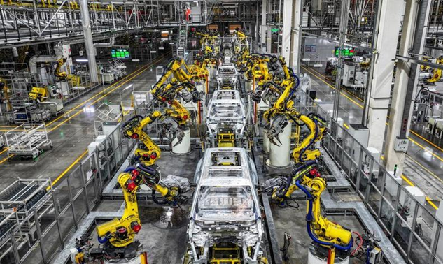
Foreign industrial companies’ profits in the Chinese mainland resumed growth in 2025 after three years of contraction, signaling a renewed industrial sector momentum and rising foreign business confidence, official data showed on Tuesday.

 As the profit growth of industrial enterprises overall also turned positive, experts and executives said the industrial economy has moved past the trough and is entering a phase marked by improving quality and efficiency, setting the stage for further recovery in 2026.

 The National Bureau of Statistics said on Tuesday that foreign-funded industrial enterprises, and those from Hong Kong, Macao and Taiwan, posted total profits of 1.74474 trillion yuan ($250.8 billion) in 2025, up 4.2 percent year-on-year.

 The growth reversed a three-year contraction — following declines of 1.7 percent in 2024, 6.7 percent in 2023 and 9.5 percent in 2022 — as part of a broader recovery in industrial profits.

 In 2025, nationwide industrial enterprises above a designated size recorded total profits of 7.3982 trillion yuan, up 0.6 percent year-on-year, ending three consecutive years of decline, the NBS said.

 “The rebound in foreign industrial profits reflects China’s appeal in advanced manufacturing, high-tech industries and new energy supply chains, as well as the benefits from the country’s opening-up, said Liu Chunsheng, an associate professor at the Central University of Finance and Economics.

 Policy guidance, Liu said, has also encouraged foreign investment to flow toward central and western regions and high-tech sectors, leading to an improved investment structure.

 He added that the profit turnaround of the overall industrial sector was driven by both a demand-side recovery — supported by trade-in programs and resilient exports — and supply-side improvements, including the momentum of high-tech sectors and efforts to curb destructive price competition, alongside a low base in 2024.

 According to the NBS, profits in high-tech manufacturing areas such as intelligent unmanned aerial vehicle manufacturing, integrated circuit production and semiconductor equipment manufacturing all surged by more than 100 percent in 2025.

 The rising quality and efficiency of China’s industrial development is attracting more foreign businesses, as Covestro AG, a German manufacturer of polymers and high-performance plastics, will increase investment in China, following its manufacturing facility of thermoplastic polyurethane started operations last week in Zhuhai, Guangdong province.

 “For multinational companies, China’s innovation ecosystem has become a growing investment magnet,” said Monique Buch, chief commercial officer of Covestro AG.

 Looking into 2026, Wen Bin, chief economist at China Minsheng Bank, said industrial profits are likely to continue the recovery as steady consumption, stabilizing investment and resilient exports are poised to underpin demand, while efforts to prevent excessive price competition further support profitability.

 Su Jian, director of Peking University’s National Center for Economic Research, however, said the outlook for industrial profits in 2026 may depend on policy support and export, which is exposed to sustained external uncertainty.

 Su said the profit divergence across companies shows that recovery may remain fragile, adding that large domestic firms may be less agile in transformation and upgrading than smaller ones and should strengthen product innovation.

 Official data showed that profits of industrial small and medium-sized enterprises rose 1.4 percent year-on-year in 2025, reversing a 1.9 percent decline in 2024. By contrast, profits of State-controlled and shareholding industrial enterprises fell 3.9 and 0.1 percent, respectively.

 Privately-owned industrial firms also came under pressure, whose profits remained flat from a year earlier, down from growth of 0.5 percent in 2024.

 “Changes in the external environment are having a growing impact, while industrial transformation and upgrading still faces adjustment pains, leaving some enterprises in operational difficulties,” said Yu Weining, chief statistician at the NBS’ Department of Industrial Statistics.

 Yu said efforts should focus on deepening the integration of technological and industrial innovation and optimizing the industrial structure to support continued improvements in industrial profitability.

 Charlie Zheng, chief economist at Samoyed Cloud Technology Group Holdings, said, “Whether the vitality of foreign-funded firms and SMEs can be transmitted more broadly to the wider private sector will be critical to sustaining industrial profit recovery in 2026.”

 Zheng said that profit disparities between SMEs and private businesses suggest possible bottlenecks in policy transmission, warning against any bias where policy support benefits smaller firms but fails to reach medium- and large-sized private enterprises.
 zhoulanxv@chinadaily.com.cn


Article inline ad

China Operationalizes World’s Largest Compressed Air Energy Storage Facility

0

By Zheng Xin | chinadaily.com.cn | Updated: 2026-01-27

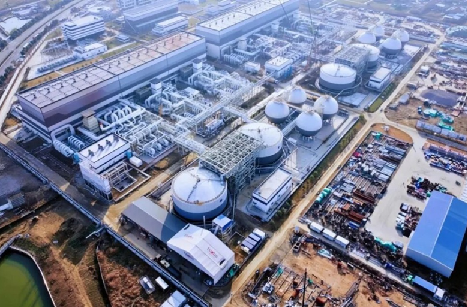
China has officially operationalized the world’s largest compressed air energy storage facility in Jiangsu province, marking a major technical milestone in the nation’s push to stabilize its green energy grid.

 Harbin Electric Corporation in Harbin, Northeast China’s Heilongjiang province, announced recently that the second unit of its salt cavern demonstration project in Jiangsu province achieved full-load power generation and was into complete commercial service.

 The facility represents a significant leap in long-duration storage technology, utilizing massive underground salt caverns to store energy in the form of compressed air.

 The plant consists of two 300-megawatt non-refined storage units with a total storage capacity of 2,400 megawatt-hours and a world-leading 71 percent conversion efficiency.

 Once fully integrated into the regional grid, the project is expected to generate about 792 million kilowatt-hours of electricity annually, providing a stable power supply for roughly 600,000 households.

 The environmental benefits are equally substantial, with the facility projected to reduce standard coal consumption by 250,000 metric tons and mitigate 600,000 tons of carbon dioxide emissions each year.

 The launch comes amid a period of explosive growth for China’s energy storage sector, which has become a vital “buffer” for the country’s rapidly expanding but intermittent wind and solar installations.

 Beijing has set a target to reach over 180 gigawatts of new-type energy storage capacity by the end of 2027, driving a wave of innovation in alternative storage methods, positioning China as a primary testing ground for next-generation energy infrastructure.


Article inline ad

China’s Guitar Capital Provides Instruments For The World

0

By Yang Jun and Liu Boqian in Guiyang | chinadaily.com.cn | Updated: 2026-01-27

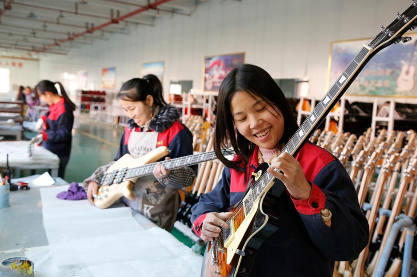
As part of this year’s first exports, thousands of guitars are being loaded onto trucks in Zheng’an county, Guizhou province, bound for Germany, Brazil, and other markets.

 The southwestern city is home to 144 guitar and supporting-component firms, with an annual output exceeding 2.4 million instruments.

 Local guitar maker Yinge Musical Instrument Manufacturing is completing its seventh export order this year. “Since our first shipment via the China–Europe freight train in 2020, order volumes have risen sharply,” said Zheng Ming, general manager of Yinge.


 Zheng Chuanjiu, founder of Zunyi Shenqu Musical Instruments Manufacturing, checks the quality of guitars. [Photo by Jia Fugang/For chinadaily.com.cn]

The company produces more than 300,000 guitars each year, all for international markets. Its export revenue reached 50 million yuan (about $7.18 million) in 2025, and orders for the first half of 2026 are already fully booked.

 Local authorities said Zheng’an’s guitar exports totaled 229 million yuan in 2025. Products from the county are sold in more than 40 countries and regions.

 Firms in the area are moving beyond contract manufacturing. Natasha Guitars, for example, now makes carbon-fiber models and smart guitars with onboard sound processing and a companion mobile app to adjust tones and effects.


Article inline ad

China’s Nuclear Power Giant Sees Big Jump In Clean Energy Portfolio

0

By Zheng Xin | chinadaily.com.cn | Updated: 2026-01-27

China General Nuclear Power Group, the country’s largest nuclear power plant operator by installed capacity, reported a significant expansion of its clean energy portfolio, with operational capacity reaching 113 million kilowatts by the end of 2025.

 The State-owned giant successfully navigated China’s 14th Five-Year Plan (2021-25) by securing approvals for 16 new nuclear power units, bringing its total capacity—including operational and under-construction projects—to over 56 million kW.

 During the five-year period, the group significantly accelerated its nuclear program to support Beijing’s carbon neutrality goals and commenced construction on 10 units and successfully connected four units to the grid during this timeframe.

 Currently, the group manages a fleet of 28 operational nuclear units and maintains a pipeline of 20 units under construction, ensuring its continued status as the national leader in nuclear power scale.

 The group’s domestic renewable energy segment experienced leapfrog development, with operational wind and solar capacity surpassing 70 million kW—a nearly threefold increase compared to the end of 2020.

 In 2025 alone, the group added 13.29 million kW of new domestic renewable capacity, marking its transition into a developer capable of delivering more than 10 million kW of new projects annually.

 Beyond its borders, the group’s clean energy footprint now spans 18 countries and regions, with a controlling operational capacity exceeding 13 million kW. To date, the group’s overseas projects have delivered more than 370 billion kWh of clean electricity.


Article inline ad

Zijin Mining Announces Purchase Of Canada’s Allied Gold

0

By Zheng Xin | chinadaily.com.cn | Updated: 2026-01-27

China’s Zijin Mining Group, which specializes in the global exploration and development of metals such as copper, gold, zinc and lithium, as well as engineering and technological research, announced on Monday that it would be buying Canada’s Allied Gold for around $4.02 billion.

 The announcement came as Zijin steps up its global expansion against the backdrop of record high prices for gold, which has boosted margins and cash flows for mining companies.

 Zijin said the acquisition aligns with the company’s development strategy and will significantly enhance the comprehensive strength of its gold sector.

 According to the company, by driving substantial growth in mined gold production, the move is pivotal in consolidating the company’s leadership within the global gold industry and achieving its strategic vision of becoming a world-class, premier mining conglomerate.


Article inline ad

Nanshan Becomes First District Outside Beijing And Shanghai To Hit GDP Of 1T Yuan

0

By CHEN HONG and CHEN MEILING | chinadaily.com.cn | Updated: 2026-01-27

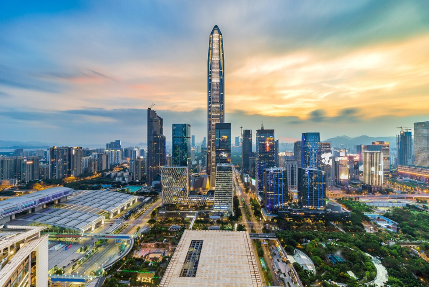
Nanshan in Shenzhen, Guangdong province, became the first district in a city not directly under the central government to achieve a GDP exceeding one trillion yuan ($143.7 billion) in 2025, according to the district’s chief Li Xiaoning on Tuesday.

 The district’s GDP rose from 652.7 billion yuan in 2020 at an annual average growth rate of more than 5.8 percent, Li said when delivering the district’s government work report at the opening ceremony of the sixth session of the 8th people’s congress of Nanshan.

 Nanshan’s GDP even surpasses that of some European countries, which is partially attributable to its status as a sci-tech innovation and industrial manufacturing center in the Guangdong-Hong Kong-Macao Greater Bay Area.

 Statistical data shows that the added value of local strategic emerging industries accounts for 60 percent of the GDP.

 Xiang Tianye, director of Nanshan’s industry and information technology bureau, said that it now has more than 20 companies able to produce a complete robot, over 200 upstream and downstream enterprises, and more than 1,000 above-scale AI enterprises.

 Nanshan has more than 200 listed companies, a number comparable to that of some provincial-level administrative regions. It is home to tech giant Tencent, drone manufacturer DJI, biotech firm BGI, and logistics company SF Holding.

 China now has three districts with a GDP surpassing one trillion yuan. Pudong New Area of Shanghai achieved that goal in 2018, and Beijing’s Haidian district of Beijing reached the milestone in 2022. Beijing and Shanghai are both municipalities directly administered by the central government.

 Xinhua contributed to this story.


Article inline ad

Huang Also Said It Is “Very Necessary” To Ensure Renminbi Exchange Rate Flexibility, With Market Forces Playing A Decisive Role In

0

pricing, during the 15th Five-Year Plan (2026-30) period as the country further advances renminbi internationalization.

 By Zhong Nan | chinadaily.com.cn | Updated: 2026-01-27

Senior executives and institutional delegates from more than 50 British companies will accompany United Kingdom Prime Minister Keir Starmer on his official visit to China from Wednesday to Saturday, the Ministry of Commerce said.

 The delegation is set to include representatives from UK’s competitive sectors, including finance, pharmaceuticals, manufacturing, culture and creative industries, reflecting the British side’s strong interest in further deepening economic and trade relations with China, according to an online statement from the ministry’s spokesperson.

 China-UK trade reached $103.7 billion in 2025, while trade in services is expected to exceed $30 billion. Mutual investment stock stood at nearly $68 billion, highlighting the growing depth of bilateral economic engagement, data from the Ministry of Commerce showed.

 The spokesperson emphasized that China attaches great importance to economic and trade cooperation with the UK and is working closely with the British side to prepare deliverables for the visit, as well as for the 2026 China–UK Business Council meeting.

 More than 100 companies from both sides have already registered to participate in the meeting, demonstrating strong enthusiasm among businesses. China’s Ministry of Commerce plans to sign outcome documents on trade and investment cooperation with the UK later this week, with the goal of fostering new growth drivers for bilateral economic ties.

 Against the backdrop of rising global trade protectionism, both China and the UK remain committed to free trade and to upholding the multilateral trading system. The two sides will pursue mutually beneficial cooperation by leveraging complementary strengths, promoting coordinated development in goods and services trade and encouraging two-way investment flows, said the spokesperson.

 The commerce official said that China-UK cooperation will continue to expand in emerging and high-potential areas, including green energy, healthcare, creative industries and intelligent manufacturing.

Article inline ad

Monetary Policy’s Focus On ‘Reasonable Rise’ In Prices Crucial, Huang Yiping Says

0

By Zhou Lanxu and Ouyang Shijia | chinadaily.com.cn | Updated: 2026-01-27

China’s monetary policy can play a bigger role in helping the economy move out of subdued inflation, a situation that requires careful attention, as it could do harm to the economy if not dealt with properly, Huang Yiping, a member of the China Finance 40 Forum and dean of Peking University’s National School of Development, said.

 “I think one particularly good thing in recent policies is that we are now pushing for a reasonable rise in the price level,” Huang said.

 Huang, also a member of the monetary policy committee of the People’s Bank of China, the country’s central bank, made the remarks at a conference held by the China Finance 40 Forum, a private think tank, on Monday.

 “Over the past period, aside from the issue of strong supply and weak demand, what I worry about most is low inflation,” he said. “I agree that monetary policy can play a bigger role (in pulling the economy out of weak prices).”

 As this year’s two sessions approach, Huang said that while China sets consumer price index targets every year, the focus has been largely on preventing the risk of high inflation rather than ensuring that the target can be reached and avoiding excessively low inflation.

 Now, he said, the situation has shifted. “I think the damage that low inflation, especially deflation, does to the economy is by no means small, and may even be more serious (than high inflation),” Huang said.

 However, he stressed that low inflation may not be fully fixed by monetary policy alone.

 “My view is that it is more of a combination punch,” he said, adding that monetary policy should fix weak prices by increasing liquidity and lowering interest rates, while fiscal and structural measures should work in tandem, including helping repair the balance sheets under heavy pressure at the micro level.

 Huang also said it is “very necessary” to ensure renminbi exchange rate flexibility, with market forces playing a decisive role in pricing, during the 15th Five-Year Plan (2026-30) period as the country further advances renminbi internationalization.


Article inline ad

Xizang’s GDP Exceeds 300 Billion Yuan For First Time

0

By Palden Nyima and Daqiong in Lhasa | chinadaily.com.cn | Updated: 2026-01-27

The economy of the Xizang autonomous region achieved a breakthrough in 2025 as its GDP surpassed 300 billion yuan ($43 billion) for the first time, officials announced during a press conference on Monday.

 Calculated at constant prices, GDP expanded by 7 percent year-on-year and led the national growth rate for all four quarters, according to Tian Guanghua, deputy director of the regional statistics bureau, who credited the milestone to the coordinated advancement of the region’s primary, secondary, and tertiary industries.

 The primary industry’s added value grew by 12.1 percent to 28.35 billion yuan, while the secondary industry reached 115.62 billion yuan, with a robust growth of 9.6 percent. The tertiary sector also saw steady progress, increasing by 4.7 percent year-on-year to nearly 159 billion yuan.

 The region prioritized development initiatives in 2025 to maintain the growth, such as launching the “Year of Key Project Construction” program and enforcing rigorous project accountability measures. The strategy drove fixed asset investments to grow by 17.2 percent year-on-year.

 Living standards also improved significantly over the year. The annual per capita disposable income grew by 6 percent to 58,794 yuan in urban areas and increased by 7.4 percent to 23,184 yuan in rural areas, narrowing the urban-rural income gap, official data showed.


Article inline ad

Tax Data Shows Faster Integration Of Sci-Tech And Industrial Innovation In China In 2025

0

Xinhua | Updated: 2026-01-27

BEIJING — China saw faster integration of sci-tech innovation with industrial innovation in 2025, with strategic emerging industries expanding steadily and traditional sectors accelerating transformation and upgrading, tax data showed Tuesday.

 Sales revenue from China’s high-tech industries rose 13.9 percent year-on-year in 2025, according to the State Taxation Administration. Sales in high-tech manufacturing and high-tech services increased by 10.1 percent and 16.6 percent, respectively.

 Breakthroughs continued in key fields. Sales revenue from lithium-ion battery manufacturing, service robot manufacturing, industrial robot manufacturing and biopharmaceutical manufacturing surged 25.1 percent, 60.7 percent, 17.4 percent and 7.7 percent, respectively, the data showed.

 Sales revenue from scientific research and technical services climbed 20.4 percent year-on-year, while sales in patent-intensive industries increased 10.7 percent, reflecting stronger application of scientific and technological achievements.

 Integration between digital technologies and the real economy continued to deepen. Core digital economy industries posted a 9.4 percent year-on-year growth in revenue, with digital product manufacturing and digital technology application services rising 9.4 percent and 13.8 percent, respectively.

 Meanwhile, traditional industries stepped up transformation and upgrading, with automation emerging as a key focus. Purchases of automation equipment by the petrochemical, steelmaking and ironmaking sectors rose 17.3 percent, 11.7 percent and 12.7 percent, respectively, the data showed.

Article inline ad