Wednesday, November 25, 2026

Home Blog Page 88

China Pledges To Be ‘Market For The World’ As It Pursues High-Standard Opening-Up

0

Xinhua | Updated: 2026-01-27

BEIJING – China, beyond its “world’s factory” name, is willing to become a “market for the world,” with its super-large market set to provide broad opportunities for products and services from all countries, the Ministry of Commerce has said, shedding light on its plans to develop investment and trade ties in 2026.

 At a press conference in Beijing on Monday, the ministry said that China will steadfastly advance its high-standard opening-up this year, and will continue to inject new impetus into the world economy through its own high-quality development.

 In advancing high-standard opening-up, the commerce ministry has vowed to further optimize supportive policies for foreign investment in 2026, pledging efforts to provide equal treatment to foreign-invested enterprises in domestic consumption promotion initiatives, government procurement, and public bidding processes so as to promote foreign firms’ long-term development in the country.

 Wang Ya, an official heading the foreign investment management department under the commerce ministry, said at the press conference that China will remain unwavering in expanding high-standard opening up as it seeks to foster new strengths in attracting foreign investment and enhance the “Invest in China” brand.

 Wang said the ministry will expand market access and the opening-up of the services sector, including telecommunications, healthcare and education. It will also support foreign-funded enterprises in the services sector in expanding their value chains.

 Efforts will also be made to strengthen services for foreign investors by fully implementing the national treatment for foreign-funded enterprises, focusing on their concerns, continuously optimizing services, and holding roundtable meetings for foreign-funded enterprises, Wang said.

 China will closely align with international high-standard economic and trade rules, carry out more extensive institutional opening-up trials, and accelerate the implementation of pilot projects for expanding the opening up of the services sector, the official said.

 According to the ministry, China will continue to promote free trade cooperation with the Gulf Cooperation Council, Switzerland, the Republic of Korea, New Zealand, Pacific Island countries, and Central Asian and African countries in 2026. It will also accelerate negotiations on investment agreements, particularly agreements with Belt and Road Initiative (BRI) partner countries.

 At the same press conference, Vice-Commerce Minister Yan Dong said that China has made solid progress over the past year in advancing economic and trade cooperation with countries participating in the BRI, noting that bilateral trade between China and BRI partner countries increased 6.3 percent year-on-year in 2025, outpacing China’s overall foreign trade growth rate by 2.5 percentage points.

 He said that further efforts are needed to optimize two-way investment cooperation, noting that China is seeking to expand its collaboration in emerging industries such as green minerals, clean energy, digital economy and artificial intelligence with BRI partner countries.

 China will continue to advance signature projects as well as “small but beautiful” livelihood initiatives to help BRI partner countries improve their infrastructure, production and living conditions, Yan said.

 Responding to a query on China’s role in the World Trade Organization (WTO), Yan said as a major trade nation and responsible major developing country, China has taken active and pragmatic measures to stabilize the international economic and trade order over the past year.

 As 2026 marks the 25th anniversary of China’s accession to the WTO, Yan said China will take part in the WTO’s work with a more proactive and open approach, adding that the country will promote the reform of the WTO toward the right direction and supports the formulation of up-to-date rules concerning industrial policies, environment and AI that will be able to better respond to the needs of industries and our times.

 China will also deepen its cooperation with countries of the Global South and make contributions — within its own capacity — under the framework of South-South cooperation, with a view to enhancing the ability of developing countries to participate in international economic and trade negotiations and benefit from the multilateral trading system, he said.

Article inline ad

Chinese, Finnish Enterprises Sign Deals As Committee For Innovative Business Cooperation Meets In Beijing

0

Xinhua | Updated: 2026-01-27

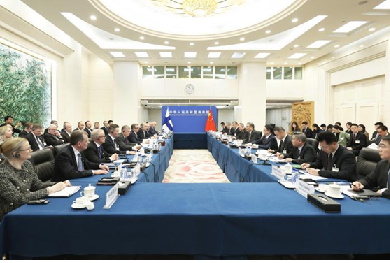
BEIJING – Chinese and Finnish enterprises on Monday engaged in lively discussions on cooperation in innovation, green development and digitalization, and signed multiple commercial agreements during the sixth meeting of the China-Finland Committee for Innovative Business Cooperation, which was held in Beijing.

 Finnish Prime Minister Petteri Orpo and Chinese Minister of Commerce Wang Wentao attended and delivered remarks at the meeting’s closing ceremony. After the meeting, Orpo and Wang held a dialogue with Finnish business representatives.

 Orpo said that China is a vital trade partner and export market for Finland, and that Finnish enterprises attach great importance to the enormous potential of the Chinese market.

 Both countries share a strong willingness to cooperate in areas such as green and low-carbon development, the circular economy, and industrial digitalization, he said, expressing hope that enterprises from both sides will translate their discussions into concrete cooperative projects.

 Finland supports free trade and fair competition, and looks forward to enhanced mutual trust and reduced trade barriers between the European Union (EU) and China, the prime minister said, adding that Finland also welcomes Chinese enterprises to invest in the country and is committed to creating a favorable business environment for them.

 Wang said that under the strategic guidance of the two heads of state, China-Finland economic and trade cooperation has yielded substantial results, setting an exemplary model of openness, cooperation, mutual benefit and win-win outcomes.

 He encouraged enterprises from both countries to strengthen confidence, seize opportunities and deepen cooperation in such fields as trade, investment and innovation.

 Wang expressed hope that the Finnish government would play a positive role in urging the EU to exercise caution in its application of economic and trade restrictive measures, meet China halfway, jointly oppose protectionism, and foster a fair, open, non-discriminatory, and predictable policy environment for China-Finland and China-EU business cooperation.

 More than 120 representatives of the business communities of China and Finland attended the meeting.

 Orpo is on an official visit to China from Sunday to Wednesday at the invitation of Chinese Premier Li Qiang. Earlier, a spokesperson for China’s Ministry of Commerce said that Orpo is accompanied on his visit by executives of over 20 companies, spanning key Finnish sectors such as machinery, forest industry, innovation, clean energy and food, which fully demonstrates Finland’s strong commitment to deepening bilateral economic and trade relations.

Article inline ad

Financial Forum Opens In Hong Kong, Highlights New Horizons In Evolving World

0

Xinhua | Updated: 2026-01-27

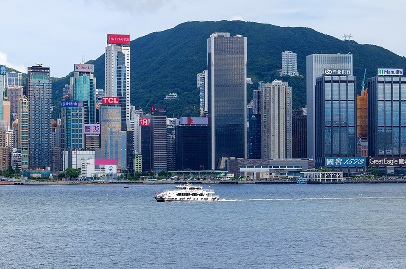
HONG KONG – The 19th Asian Financial Forum (AFF) opened in Hong Kong on Monday, bringing together global political and business leaders and regulatory representatives to promote international financial cooperation and policy coordination.

 Under the theme “Co-creating New Horizons amid an Evolving Landscape,” this year’s forum features the inaugural Global Business Summit, which will assess the impact of high-growth industries including artificial intelligence, robotics and healthcare.

 Frederick Ma, chairman of the Hong Kong Trade Development Council (HKTDC), said the newly-introduced summit is part of an increased focus to strengthen ties between finance and the real economy at the AFF to help support sustained innovation and long-term growth.

 In his speech, John Lee, chief executive of the Hong Kong Special Administrative Region (HKSAR), underscored the city’s unique advantages under “one country, two systems,” as it has ensured that Hong Kong thrives as a top destination for enterprises seeking to grow and develop in a safe and convenient business environment.

 Lee noted that the number of foreign- and Chinese mainland-affiliated companies in Hong Kong reached 11,070 in 2025, up 11 percent from the year before and hitting a record high.

 To boost Hong Kong’s status as an international financial center, Lee said the HKSAR government will deepen the equity market, expand the bond market, advance the asset management and wealth management sectors, and build an international gold trading market and commodities trading ecosystem in Hong Kong.

 During the forum, the Financial Services and the Treasury Bureau signed a cooperation agreement with the Shanghai Gold Exchange, a new milestone in deepening cooperation between the gold markets of Hong Kong and Shanghai.

 According to the pact, the two sides will work together to establish a high-level, collaborative governance structure for Hong Kong’s new gold central clearing system, and open new avenues for physical infrastructure synergy and market interconnectivity.

 The two-day forum, co-organized by the HKSAR and the HKTDC, includes more than 40 sessions covering topics such as the global economic outlook, wealth management, supply chain financing, and gold exchange. It is expected to attract over 3,600 financial and business representatives from around the world.

Article inline ad

Cinema Fuels China’s Consumption Boom, Economic Vitality

0

Xinhua | Updated: 2026-01-27

BEIJING – Earlier this year, Xin Minghua, a devoted fan of the “Ne Zha” animated films, journeyed all the way from East China’s Shanghai to the country’s southwestern Sichuan province, just to visit Nezha Palace, a site dedicated to the legendary mythological figure.

 “We heard there was a Nezha Palace here and thought it was interesting, so we came to see it for ourselves,” Xin said.

 Visitor numbers at the Cuiping Hill scenic area in Yibin, where the palace was built in 1991, have surged since these movies became major hits, with attendance in 2025 tripling that of 2024 and a daily attendance peaking at 8,000, according to site operators.

 The success of Chinese films is flowing beyond the big screen, driving a new wave of consumption across the country. From film-themed travel and spin-off merchandise to cinema equipment, box-office hits are opening up fresh avenues for economic growth.

 Data from the China Film Administration (CFA) show that the country’s film industry had generated a total output of 817.26 billion yuan ($117 billion) in 2025, placing it among the largest in the world. Each yuan earned at the box office is estimated to create 15.77 yuan of output in related industries, a figure also among the global leaders.

 Experts say this impressive performance reflects not only the growing strength of China’s film sector, but also a broader shift from a box-office-driven model to a more diverse consumption economy.

 That transition, notably, is being reinforced by policy support. In 2025, the CFA rolled out a series of “film-plus” initiatives nationwide.

 “The film industry is taking practical steps to deepen integration with tourism, dining, technology, gaming and merchandise sectors,” said Luo Yang, deputy head of the CFA.

 “Nobody,” an animated film inspired by the classic Chinese tale, “Journey to the West,” has emerged as a standout example of this transformation.

 This film has seen the launch of more than 800 licensed products, generating nearly 2.5 billion yuan in retail sales. It has also secured IP licensing and co-branding deals with over 30 companies. One collaboration with a coffee chain proved especially successful, with sales of the themed drinks surpassing 5 million cups within just three days of launch.

 “The Legend of Hei 2,” another animated blockbuster, has drawn large crowds to pop-up stores, thus boosting offline spending. Industry data reveal that for every yuan spent on a ticket, nearly five yuan is generated in related merchandise.

 Beyond merchandise, films are sparking a tourism boom, with one movie after another turning entire cities into must-visit destinations.

 In “Creation of the Gods II: Demon Force,” elements of Yin-Shang culture, the ancient culture centered in central China’s Anyang city, have become a magnet for visitors, boosting the city’s cultural tourism.

 Xu Hejian, deputy curator of Anyang’s Yinxu Museum, said the museum has seen consistently high visitor numbers since the film premiered, with many visitors eager to track down the artifacts showcased on screen.

 An official from the Anyang municipal government said the city plans to host a series of cultural and tourism activities over the Spring Festival holiday, with a total of 235 events scheduled.

 China’s flourishing film industry is also driving growth in cinema technology and the expansion of movie theaters.

 In 2025, orders for LED cinema screens in China jumped by roughly 50 percent compared with the previous year, cementing the country’s position as home to the world’s largest number of LED-equipped theaters. Nationwide, a total of 1,065 cinemas were newly built last year.

 With virtual reality films now getting screening approval under China’s national film regulatory framework, many cinemas in 2025 took the lead in investing in a new generation of screening halls. Beijing’s 798 Hyper Vision, the country’s first virtual reality cinema, has welcomed around 63,000 visitors since opening in May last year.

 Despite its rapid growth, China’s film economy still has significant room for expansion. According to a film industry report released in December last year, revenue from movie merchandise remained relatively low in China.

 The Chinese market also faces a lack of stable, high-quality intellectual property and advanced industrial design and production capabilities, the report observed.

 Even so, experts say China’s film industry, underpinned by a vast domestic market, a complete industrial chain and strong policy support, has moved beyond the phase of simply catching up in scale and is entering a new stage of quality-driven growth. The potential of film to promote China’s economic and social development is being realized at pace, with the film economy emerging as a powerful engine for upgrading the country’s service consumption sector.

 “The film industry is building new forms of cultural business and a more diverse consumption ecosystem, reflecting the vast growth potential of China’s cultural economy and creating new drivers of economic growth,” said Zhu Di, a researcher at the Chinese Academy of Social Sciences.

Article inline ad

‘Digital Ids’ For EV Batteries To Enable Efficient Reuse

0

By Ma Si in Haikou | China Daily | Updated: 2026-01-27

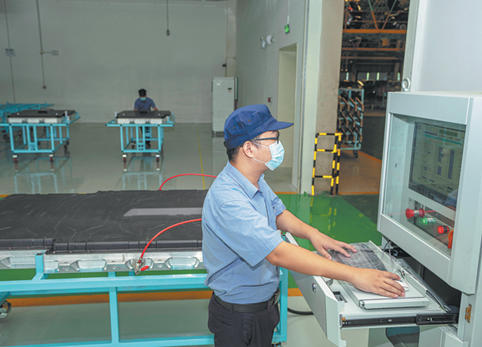
China will assign a unique “digital identity” to every new-energy vehicle power battery to strengthen full-lifecycle supervision and promote safe, efficient recycling, the country’s top industry regulator said on Friday.

 The move is part of newly released regulations aimed at establishing a standardized system for handling retired batteries, as the country anticipates a massive wave of battery retirements in the coming years.

 The volume of retired batteries in China could exceed 1 million metric tons a year in 2030, according to the Ministry of Industry and Information Technology.

 Wang Peng, head of the energy conservation and comprehensive utilization department at MIIT, said at a news conference in Beijing that the digital ID, linked to a battery’s unique code, will track its entire journey — from production and installation to replacement, vehicle retirement, recycling, and final reuse.

 “This represents a significant institutional innovation, applying digital technology to trace the entire lifecycle of power batteries,” Wang said.

 The measure is included in a document roughly translated as the interim measures for the recycling and comprehensive utilization of retired NEV power batteries, jointly issued recently by MIIT and five other ministries. The rules also clarify the recycling responsibilities of battery and automotive manufacturers.

 Power batteries contain not only valuable metals such as nickel, cobalt, manganese and lithium, but also toxic and hazardous materials such as fluoride compounds. If not recycled properly, these batteries can pollute the environment and lead to resource wastage.

 With NEV sales soaring, China is facing a rapid increase in retired batteries. Improper handling poses environmental and safety risks, while proper recycling can recover valuable resources like lithium, cobalt, and nickel.

 Wang urged consumers to ensure that end-of-life vehicles and their batteries are processed by authorized recyclers, warning against using informal channels that threaten public safety and the environment.

 Progress is already being made.

 In 2025, over 400,000 metric tons of retired NEV batteries were comprehensively reused in China, a year-on-year increase of 32.9 percent, with leading enterprises achieving internationally advanced recovery rates for key metals.

 Wen Xuefeng, deputy director of the department of solid waste and chemicals of the Ministry of Ecology and Environment, said the ministry will work with the State Administration for Market Regulation to launch pilot programs on carbon footprint labeling and certification. It will also enhance international cooperation to explore the mutual recognition of standards, rules and factors, helping to improve the low-carbon competitiveness of power battery products.

 Zhu Meina, deputy director of the standards innovation management department of the State Administration for Market Regulation, said the administration will work closely with MIIT and other relevant departments to accelerate the formulation of standards and improve the standards system for power battery recycling.

 As for what the public should do if their NEV power battery reaches the end of its life, Wang from MIIT said the recycling of waste power batteries is closely related to personal and property safety, as well as environmental protection. It is not only “everyone’s responsibility”, but also requires “everyone’s active participation”.

 He called on consumers to carefully review the manufacturer’s instructions regarding waste power battery recycling while purchasing a new energy vehicle. After purchase, consumers should provide necessary traceability information, such as the vehicle license plate number, to the manufacturer. Manufacturers are required to fulfill data security protection obligations in accordance with the law and safeguard consumer privacy.

 When a vehicle is to be scrapped, consumers should hand over both the vehicle and its power battery to qualified recycling and dismantling enterprises to complete the scrapping procedures in accordance with regulations, Wang said.

 The measures also specify supervision, management, and legal responsibilities.

 Administrative penalties, including fines, are stipulated for violations such as noncompliance with power battery coding requirements, failure to fulfill recycling responsibilities, improper handling of waste power batteries, and non-reporting of required information.

Article inline ad

Haikou Charts Path For Sustainable Future

0

New models of industry are being combined with creative financial architecture to fuel green transition

By Ma Si and Chen Bowen in Haikou | China Daily | Updated: 2026-01-27

Beneath the warm Hainan sun, a “solar tree” with silver-gray “leaves” quietly converts sunlight into electricity. Nearby, benches made of local volcanic stone, embedded with wireless chargers, offer park-goers a blend of rest and clean energy.

 This is not a conceptual art exhibit, but a glimpse into daily operations at the Haikou National High-Tech Industrial Development Zone, recently selected as Hainan’s sole pilot for a national-level zero-carbon park.

 The scene here encapsulates a monumental, two-pronged push unfolding across China: creating tangible, from the ground up models of sustainable industry while simultaneously constructing a top-down financial architecture to fuel this green transition nationwide.

 The Haikou zone aims to build a “model room” for a zero-carbon park with Hainan Free Trade Port characteristics within five years. Its strategy is comprehensively multidimensional, integrating low-carbon energy, construction and smart operations into a cohesive system.

 Zheng Yuhua, general manager of the Hainan Special Economic Zone Donghu High-tech Investment Co, said the park’s approach turns buildings themselves into “power generators” by deeply integrating photovoltaic panels into roofs and canopies. This is supported by essential energy storage systems and a smart energy management system for real-time dispatch, collectively forming a robust framework to effectively reduce carbon emissions.

 The plan’s vision also extends strategically beyond the park’s immediate perimeter. Hong Jianhui, chief economist of the Haikou National High-Tech Industrial Development Zone, revealed a significant green power supply agreement with Datang International Power Generation Co Ltd, which will provide 100 to 400 million kilowatt-hours of offshore wind power annually to support the zone’s long-term low-carbon development.

 This initiative is part of a broader provincial drive, following detailed guidelines issued by Hainan’s authorities in late December for building zero-carbon parks, which outline systematic tasks from creating new energy systems and upgrading infrastructure to implementing smart carbon management platforms.

 Haikou’s on-the-ground efforts are a focused microcosm of a vast national strategy where the “green factory” serves as the fundamental core unit. China has systematically cultivated 6,430 national-level green factories, 491 green industrial parks, and 727 green supply chains, promoting over 40,000 types of green products, according to data from the Ministry of Industry and Information Technology.

 These green factories now account for over 20 percent of China’s manufacturing output by value, a substantial increase from just 9 percent in 2020. Their collective environmental impact is profoundly significant, with green industrial parks consuming only about two-thirds of the energy and one-fourth of the water per unit of industrial output compared to the national average, while also maintaining a solid waste utilization rate exceeding 95 percent.

 Green manufacturing is a modern industrial model characterized by low resource consumption, minimal emissions, high efficiency and substantial benefits. In recent years, MIIT said it has accelerated the promotion and application of advanced green technologies and equipment in areas such as energy conservation, carbon reduction, water saving, environmental protection and comprehensive resource utilization.

 According to MIIT, it has intensified efforts in green and low-carbon transformation, established a green manufacturing and service system, driven the coordinated transition of industrial and supply chains, and integrated the green development concept into the entire process of industrial production, achieving positive outcomes.

 For instance, the advantages of China’s green energy equipment industry have become more prominent. The nation’s renewable energy products are exported to over 200 countries and regions, meeting more than 80 percent of global demand for photovoltaic modules and 70 percent for wind power equipment. This helps nations around the world, especially developing countries, access clean, reliable and affordable energy, data from MIIT show.

 Meanwhile, from 2021 to 2024,China produced approximately 15.6 trillion kW of photovoltaic modules, helping the world generate about 3.2 trillion kilowatt-hours of green electricity and reduce carbon dioxide emissions by roughly 2.54 billion metric tons, MIIT said.

 However, sustaining and accelerating this transformative growth require massive, sustained investment. Since the start of the 14th Five-Year Plan (2021-25), national green factories have undertaken over 10,000 green upgrade projects, with total investment exceeding 300 billion yuan ($43.1 billion), revealing a substantial and urgent demand for green financing.

 Recognizing this critical need, MIIT and the People’s Bank of China jointly issued a pivotal document in December, roughly translated as “Utilizing Green Financial Policies to Support Green Factory Development”. The document establishes a vital working mechanism for green finance to support green factories.

 Wang Peng, head of the department of energy conservation and comprehensive utilization at MIIT, said: “The policy aims to establish and improve the working mechanism for green finance supporting green factories, promote financial institutions to develop financial products supporting green manufacturing, and increase investment in areas like energy conservation, carbon reduction, water saving, environmental protection, and resource utilization for green factories.”

 The policy focuses its support on several key interconnected areas: facilitating breakthrough projects in traditional industries, such as major process innovation; boosting green upgrade projects for energy saving and pollution reduction; and crucially, supporting the construction of zero-carbon factories.

 Moving beyond broad policy directives, the authorities are actively building specific, operational channels to efficiently connect green projects with necessary capital.

 A central mechanism is the national industry-finance cooperation platform, which now hosts a dedicated industrial green development section. This section optimizes green labels for enterprises and features over a hundred tailored financial products such as “energy conservation loans” and “green factory loans”. The effectiveness of this targeted approach is reflected in the growth data.

 Lei Wen, deputy head of the finance department at MIIT, said in the first eleven months of 2025, green industrial loans grew by 22.3 percent year-on-year, reaching 73.56 billion yuan in new loans.

 Furthermore, Wang from MIIT said the ministry has established formal working mechanisms with 12 major financial institutions, including the Industrial and Commercial Bank of China and China Minsheng Bank, to strengthen policy guidance and support.

 This evolving ecosystem is designed for precision and accessibility. Financial institutions are responding with integrated services. Yan Xinguo, chief manager of the corporate banking department at China Minsheng Bank, said: “We provide online credit-based ‘Easy-Create’ series products for listed technology companies, enabling faster start-ups and more stable growth.”

 He highlighted that the bank offers comprehensive services spanning equipment financing leases, investment wealth management and cross-border investment financing, and assists enterprises in issuing green innovation bonds.

 On the regulatory side, Yu Jian, deputy head of the credit market department at PBOC, outlined the next steps for implementation. The central bank will utilize structural monetary policy tools and encourage financial institutions to optimize approval processes, develop tailored financial products like medium — and long-term loans, and broaden direct financing channels.

 “We will continue to strengthen coordination with MIIT to guide financial institutions to standardize fund allocation management and ensure capital is directed toward genuine green projects,” Yu said.

 The ultimate goal is a continuous elevation of industrial standards, viewing green designation not as a final endpoint, but as a dynamic starting point for deeper transformation.

 MIIT has unveiled plans to implement a “green factory quality improvement and expansion plan”, with the ambitious aim of increasing the output value share of green factories at national, provincial and city levels to 40 percent by 2030, up from the current level of 20 percent.

 The strategic path forward involves several interconnected initiatives: cultivating zero-carbon factories by encouraging existing green factories to dig deeper into carbon reduction potential; greening entire supply chains by leveraging the purchasing power of large corporations to drive upgrades across their supplier networks; and exploring innovative carbon footprint management by piloting data sharing for carbon emissions across interconnected supply chains.

 These national directives have found their tangible expression in projects on the ground. Back in Haikou, the concrete projects underway — from smart vehicle dismantling and battery recycling to liquid hydrogen energy and methanol-powered commercial vehicle manufacturing — sketch the detailed blueprint for this sustainable future.

 They represent the living reality of a national ambition, demonstrating that the powerful fusion of targeted financial mechanisms and localized, innovative execution is actively powering China’s comprehensive industrial green transition, experts said.

Article inline ad

Services Sector To Open Wider

0

By Zhong Nan | chinadaily.com.cn | Updated: 2026-01-27

China will further open its services sector in 2026, widening market access and accelerating pilot projects in the telecommunications, healthcare and education sectors, as policymakers seek to translate commitments into concrete outcomes, government officials said on Monday.

 Speaking at a news conference in Beijing, Wang Ya, head of the department of foreign investment administration at the Ministry of Commerce, said the policy measures will support foreign-invested service companies in extending their value chains in China, enabling more specialized, integrated and digitalized operations.

 The government will ensure that overseas investors can claim tax credits when reinvesting profits earned in China, while providing equal treatment to foreign-funded businesses in consumption promotion, government procurement and bidding activities, said Wang.

 Vice-Minister of Commerce Yan Dong said these measures will help steer foreign investment toward service-oriented consumption and improve the quality and diversity of services supply.

 Aiming to guide more foreign investment toward advanced manufacturing, modern services, high-tech industries, energy conservation and environmental protection, China will put the 2025 edition of its Catalogue of Encouraged Industries for Foreign Investment into force on Feb 1, 2026, according to information released by the Ministry of Commerce.

 The updated catalogue contains 1,679 items, representing a net increase of 205 entries from the 2022 version, along with revisions to 303 items.

 Against this policy backdrop, International Workplace Group, the Switzerland-headquartered hybrid workspace platform operating in over 120 countries and regions, will deploy additional resources to expand its presence in China’s lower-tier cities, targeting emerging demand beyond major metropolitan areas.

 Edward Hu, country general manager of IWG China, said the company sees China’s ongoing push to open up the services sector and improve the business environment as a key driver of its expansion, with policy support for services consumption and urban development underpinning sustained demand for flexible office solutions.

 Hu said IWG will partner closely with local property owners to revitalize existing commercial assets while leveraging its global network, corporate client base and standardized operating systems to support scalable, sustainable growth in China this year.

 Boosting consumption

 As China expands opening-up in the services sector, authorities are also turning their attention to consumption, seeking to ensure that policy gains are felt more directly by consumers.

 Yang Mu, head of the department of market operation and consumption promotion at the Ministry of Commerce, said China will further optimize the shopping environment by accelerating the development of international consumption hub cities, advancing pilot programs to build an internationally oriented commercial environment, and supporting trials of new retail formats, models and scenarios.

 “The efforts aim to create a number of highly visible consumption scenarios, enabling both domestic and overseas consumers to better enjoy high-quality living experiences,” she said.

 Under its plan, the government will organize more than 20 “Shopping in China” themed promotional events across the country and support 15 pilot cities in hosting dedicated city showcase events this year.

 Launched in April 2025, the “Shopping in China” initiative aims to create a more internationally friendly consumption landscape and enhance the country’s appeal as a global consumption hub through measures such as streamlining visa procedures and improving departure tax-refund arrangements.

 The policy tailwinds have continued to fuel both inbound tourism and spending by overseas visitors.

 Since Nanjing, the capital of East China’s Jiangsu province, became one of the ports allowing 24-hour direct transit without immigration clearance in early November last year, the policy — combined with more favorable departure tax-refund arrangements — has enabled foreign transit passengers to shop, dine and consume freely during layovers, further enhancing the city’s appeal as an international consumption hub.

 The tax-refund offices at Nanjing Lukou International Airport and Wuxi Sunan International Airport handled a total of 1,705 refund claims in 2025, with the value of verified applications reaching 52.72 million yuan ($7.58 million), jumping 138.79 percent and 91.45 percent year-on-year, respectively, data from Nanjing Customs showed.


Article inline ad

Industrial And Software Sectors Contributed Half Of Shanghai’s GDP In 2025

0

By WANG YING in Shanghai | chinadaily.com.cn | Updated: 2026-01-26

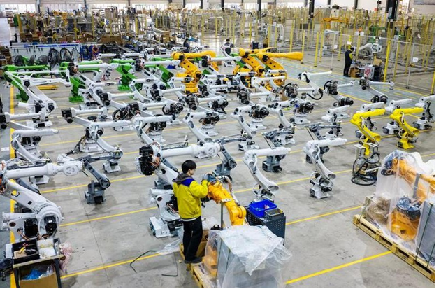
With the accelerated development of new quality productive forces, Shanghai’s industry, along with its software and information technology service industry, maintained stable and progressive growth by contributing 50 percent of the city’s GDP, which provided strong support for the city’s economic and social development, according to official sources.

 “Total industrial output of the city’s industrial enterprises above the designated size, which refers to those with an annual revenue of 20 million yuan or above, reached 4.07 trillion yuan ($584.52 billion) in 2025, setting a historical record, and surpassing the 4 trillion yuan mark after two years’ gap,” Xin Leifu, director of economic operation department with the Shanghai Commission of Economy and Informatization, said during a news conference on Friday.

 “The added value of these industrial enterprises grew by 5.1 percent, marking the fastest growth in nearly four years,” Xin said.

 Among all, transportation equipment manufacturing, including railway, shipbuilding, aerospace, reported output growth of 15.8 percent, electrical machinery and equipment manufacturing soared 11.1 percent, automobile manufacturing of 7.8 percent, and that of computer, communication, and other electronic equipment of 7.7 percent, according to Xin.

 The three leading industries, which are integrated circuits, biomedicine, and artificial intelligence, have seen their combined industrial scale increase 9.6 percent in 2025, and their output value expanded 85 percent during the 14th Five-Year Plan (2021-25) period, with their contribution to the city’s total industrial output up from 7.8 percent to 12.4 percent during the same period.

 “Integrated circuit and artificial intelligence manufacturing grew 15.1 percent and 13.6 percent, respectively, in 2025, becoming pillars in supporting Shanghai’s industrial economic development,” Xin said.

 Significant revenue growth was also seen in Shanghai’s software and information technology service industry, according to Ye Yueming, an official with the Shanghai Commission of Economy and Informatization. The sector’s annual revenue surged from 683.2 billion yuan in 2020 to 1.7 trillion yuan in the first 11 months of 2025, with the full-year figure projected to exceed 1.9 trillion yuan.

 “Added value of information transmission, along with software and information technology service industry, reached 713.99 billion yuan, a growth of 15.3 percent, and contributed 12.6 percent of the city’s GDP,” Ye said, adding that it is becoming Shanghai’s third-largest industry after industry and finance.

 Thanks to the combined efforts of Shanghai’s primary, secondary, and tertiary industries, the city reported its GDP to rise 5.4 percent to 5.67 trillion yuan in 2025, 0.4 percentage point higher than the national average, Xin said.


Article inline ad

ICM Deepens China Engagement Amid Resilient Chemical Demand

0

By Zhong Nan | chinadaily.com.cn | Updated: 2026-01-26

With strong demand for chemical products continuing across China’s industrial sectors, the Association of International Chemical Manufacturers (AICM) is deepening its engagement in the country by strengthening policy dialogue and supporting the high-quality growth of foreign-invested chemical companies, said its top executive.

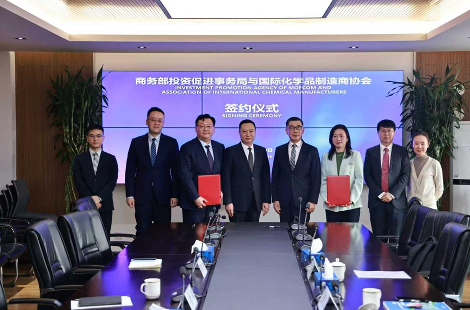
 This commitment was underscored by a newly signed cooperation framework with Chinese authorities. The Shanghai-headquartered global industrial organization signed a strategic cooperation agreement with the Investment Promotion Agency of the Ministry of Commerce on Jan 19 in Beijing. The agreement aims to enhance communication and industrial matchmaking for foreign-funded chemical businesses.

 The two sides will jointly establish regular forums for CEOs of multinational chemical companies operating in China, aiming to improve policy transparency and a favorable business environment.

 Xia Fuliang, chairman of AICM, emphasized that the cooperation reflects China’s efficient governance and its commitment to supporting high-quality foreign investment.

 “Clear, direct and timely policy communication is the most important foundation for long-term investment decisions,” Xia said, noting that such mechanisms significantly enhance the confidence of multinational corporations in China.

 Founded in 1988, AICM has been a key player in China’s chemical industry for nearly four decades. Its members include companies from Europe, North America, Asia and the Middle East, which have contributed to the sector’s rapid transformation from fragmented production to large-scale, integrated and increasingly low-carbon development.

 China now accounts for about 42 percent of global chemical output, a share widely expected to approach 50 percent by 2030. This is not only a huge market, but one fulfilled with structural opportunities, said Xia, who also is president of China operations at German specialty chemicals group Evonik and the company’s head of segment customs solutions for Asia-Pacific region.

 AICM revised its mission in 2025 to reflect changes in the chemical industry’s operating environment in China, placing greater emphasis on innovation, green transition and production safety.

 Multinational chemical companies are also moving away from price-based competition, bringing advanced technologies and processes to China and increasingly serving global markets through their China operations.

 Believing that green transition is an opportunity rather than a constraint, Xia said that chemical materials are essential inputs for renewable energy, electric vehicles and energy efficiency upgrades, making the sector a key driver of China’s dual-carbon goals.

 Despite global economic uncertainties, investment momentum among multinational chemical companies in China has remained resilient. Major projects include ExxonMobil’s large-scale petrochemical complex in Guangdong province, SABIC’s investment project in Fujian province, and Evonik’s specialty chemicals projects in Jiangsu and Sichuan provinces.

 Looking ahead, Xia said demand for specialty chemicals will continue to expand in sectors such as new energy vehicles, pharmaceuticals, healthcare and high-end equipment. As China advances rapidly in digitalization and artificial intelligence, the chemical industry is also accelerating the use of smart manufacturing, data-driven safety management and AI-assisted research and development.

Article inline ad

Chinese Sportswear Firm To Secure Major Stake In Puma

0

By Wang Zhuoqiong | chinadaily.com.cn | Updated: 2026-01-27

Anta Sports Products Ltd announced on Tuesday that it has entered into a share purchase agreement with Groupe Artémis, the investment firm of the Pinault family, to acquire a 29.06 percent stake in the global sportswear giant behind the Puma brand.

 The deal for Puma SE, valued at 1.5 billion euros ($1.78 billion), marks a key milestone in Anta Sports’ attempts to expand its footprint in the global sporting goods market.

 The transaction, which is expected to close by the end of the year, is subject to regulatory approvals and customary closing conditions. The acquisition will be entirely financed through Anta’s internal cash reserves.

 Anta chairman Ding Shizhon said: “This acquisition positions Anta Sports as the largest shareholder of Puma and is a significant step in our ‘single-focus, multi-brand, globalization’ strategy.”

 Ding said Puma’s iconic status and rich heritage provide a solid foundation for future growth, while the move would unlock the brand’s full potential, driving further global expansion, particularly in markets such as China.

 Ding said his group remains confident in the brand’s management and strategic direction.

 “Our aim is to build a strong, trust-based partnership while maintaining the independence of Puma’s operations,” he added.

 As part of the acquisition, Anta will seek representation on Puma’s supervisory board, ensuring alignment with both shareholders and employee representatives.

 Anta states that it has no immediate plans for a full takeover of Puma and remains committed to respecting Puma’s independent governance and cultural values as a listed German entity.

Article inline ad